News of a young, seemingly healthy person — sometimes even a keen athlete — suffering a sudden heart attack keeps making headlines. How can someone who exercises regularly still have a myocardial infarction? Dr. Wei Meng (魏盟), MD, PhD, Director of the Jiahui Heart Center, walks through the mechanism, the risk factors, the warning signs, and — most importantly — what to do in the first critical minutes.
First, Understand How a Heart Attack Happens: The “Soup Dumpling” in Your Artery
Dr. Wei uses a vivid analogy. A cholesterol plaque inside a blood vessel is like a xiaolongbao — a Chinese soup dumpling: a thin “skin” (the fibrous cap) wrapped around hot, oily “soup” (the lipid core). Under certain triggers — intense exertion, a surge of stress hormones, a spike in blood pressure — the thin skin can rupture. The oily contents spill into the vessel, platelets rush in, and a blood clot forms almost instantly, blocking the artery.
- If the blocked vessel supplies the heart → myocardial infarction (heart attack);
- If it supplies the brain → stroke;
- If it blocks vessels of other organs → bowel or organ ischemia, which in severe cases can cause paralytic ileus and life-threatening complications.
In other words, the “dumpling skin” — not how hard you exercise on a given day — decides whether disaster strikes.
Heart Attacks Really Are Getting Younger
This is not an impression but a trend. Hospitalization rates for acute myocardial infarction (AMI) in China have been rising year by year, and the increase among adults under 55 has been especially fast — national data show the rate climbed by roughly 50% between 2007 and 2012 [1].
Dr. Wei lists the independent risk factors behind heart attacks in young people:
- Dyslipidemia — abnormal cholesterol, the raw material of plaques;
- High blood glucose (diabetes and pre-diabetes);
- Hypertension;
- Smoking — damages the “dumpling skin” directly;
- Excessive alcohol drinking;
- Chronic psychological stress;
- Overwork and chronic sleep deprivation (staying up late).

Long hours, deadline pressure and sleepless nights quietly load the arteries of young professionals.

Excessive drinking is one of the independent risk factors for heart attacks in young adults.
Exercise Is the Trigger, Not the Cause
So why does a heart attack sometimes strike during or after sports? Dr. Wei's explanation: exercise is the trigger, not the cause. Vigorous exertion raises heart rate and blood pressure and can shear open an unstable plaque — the “powder keg” of cholesterol that has been quietly deposited over years. The explosion happens during exercise, but the explosive was planted long before.
He cites a widely reported case of a young celebrity in whom 90% of a coronary artery was found blocked [2][3]. The takeaway is not “stop exercising” — regular moderate exercise remains one of the best things for the heart — but rather: exercise does not grant immunity from cholesterol deposits. A 30-year-old artery can look like a 60-year-old's on the inside.
How to Recognize a Cardiac Chest Pain
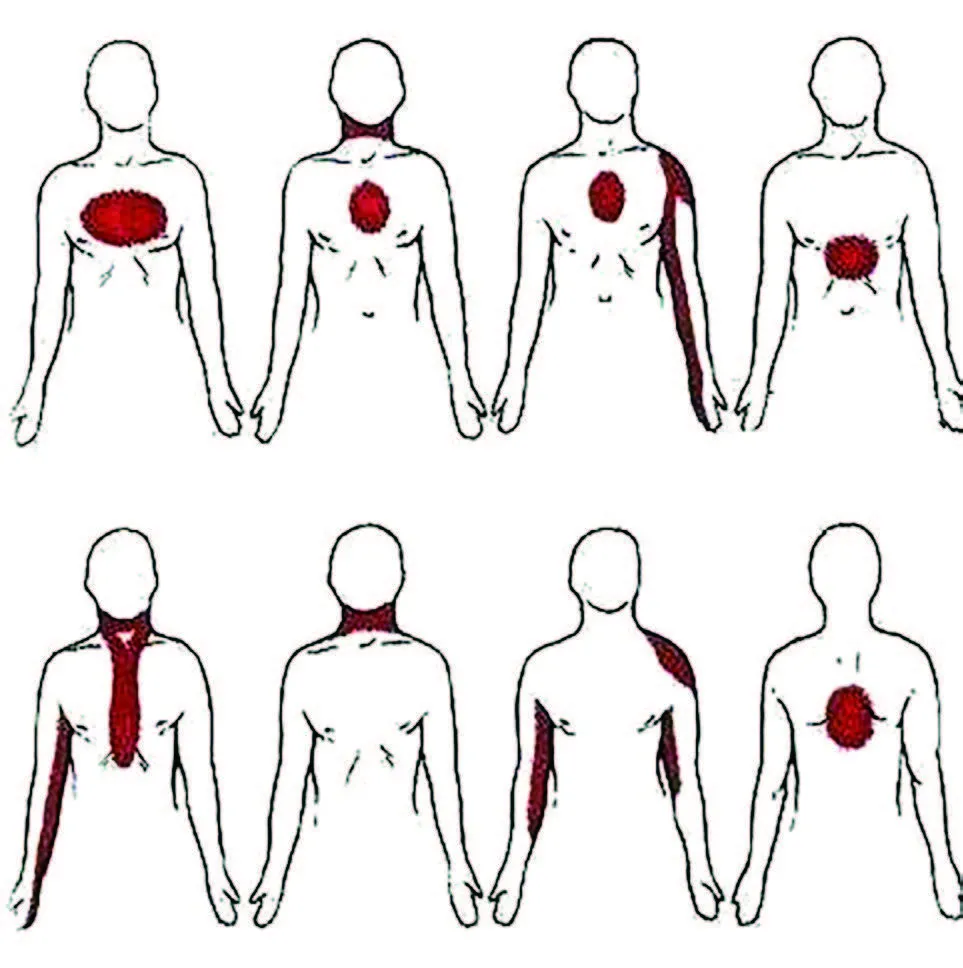
Typical heart-attack chest pain has recognizable features:
- Location: behind the middle-to-lower third of the breastbone (sternum);
- Character: oppression, tightness, squeezing, burning or crushing pressure — rarely a sharp, pinpoint pain;
- Radiation: pain may spread to the neck, jaw, shoulders, both arms or the upper abdomen;
- Duration: pain lasting a few minutes and easing with rest suggests angina; pain lasting tens of minutes or longer, with sweating or nausea, suggests a heart attack in progress.
Doctors suspect acute coronary syndrome when at least two of the following three are present [1]: typical angina symptoms; ischemic changes on the ECG (new, or transient ST-segment depression of at least 0.1 mV); and a rise in cardiac biomarkers (cTnT, cTnI or CK-MB).
Three Steps to Confirm the Diagnosis
If cardiac chest pain is suspected, Jiahui's chest-pain pathway moves through three steps:
- Electrocardiogram (ECG) — takes less than 5 minutes. It is most informative when done while the pain is present, which is why patients are advised not to wait for the pain to pass before coming in.
- Blood tests for cardiac markers — troponin begins to rise within 3–4 hours of artery blockage, peaks at 10–24 hours and can remain elevated for 7–14 days [4]. A single normal value does not rule out a heart attack; serial measurements are often needed.
- Coronary CTA, then coronary angiography — coronary CTA non-invasively shows whether plaques narrow the vessels; coronary angiography remains the gold standard, and if a critical blockage is confirmed, a stent can be placed in the same sitting to reopen the artery [5].
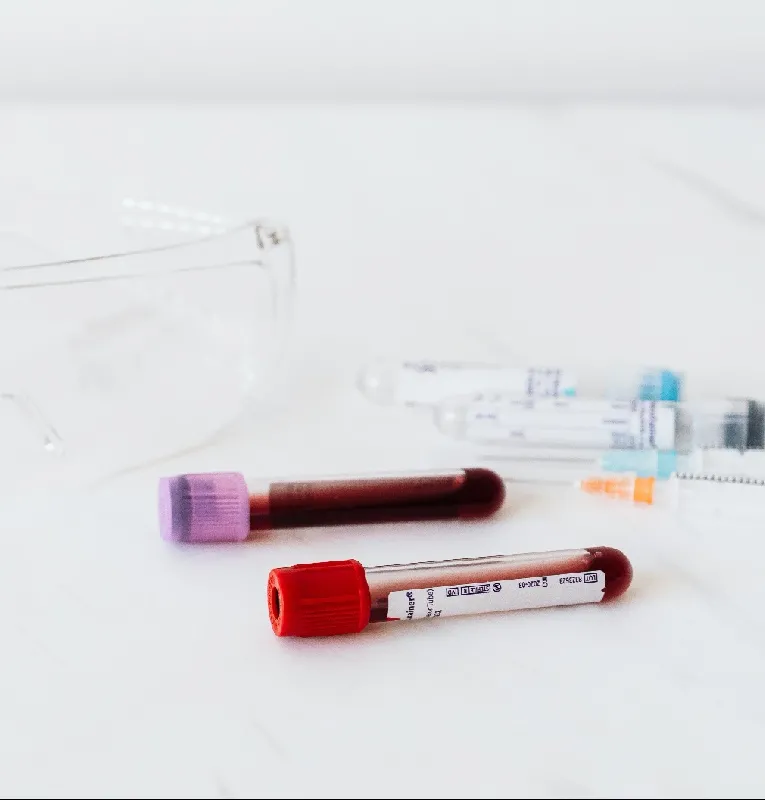
Cardiac markers such as troponin rise within 3–4 hours of a coronary blockage — blood tests are a key step in confirming a heart attack.
If the Worst Happens: The Golden 120 Minutes
Dr. Wei emphasizes the first-aid essentials every family should know:
- Call emergency services immediately — in China, dial 120; do not drive yourself;
- While waiting, nitroglycerin can be taken sublingually and aspirin chewed — but only as directed by the emergency dispatcher or a physician;
- The myocardium begins to die once its artery is blocked: reopening the vessel within the “golden 120 minutes” saves the most heart muscle [6].
November 20 — written as 1120 in Chinese numeric shorthand — is China's Heart Attack Rescue Day, echoing the campaign's two mottos: “chest pain — call 120” and “strive for reperfusion within 120 minutes”.
“Young people who exercise are not immune. Know your cholesterol, blood glucose and blood pressure numbers, respect your sleep — and never talk yourself out of chest pain.”
About the Expert: Dr. Wei Meng
Dr. Wei Meng, MD, PhD, is Director of the Jiahui Heart Center. He received his medical bachelor's degree from Shihezi Medical College, Xinjiang, in 1982 and his doctorate from Shanghai Medical University in 1991, followed by interventional cardiology training in the United States (1995) and Germany (1997). Before joining Jiahui he served as Director of the Heart Center and Director of Cardiovascular Medicine at a large tertiary public hospital in Shanghai, and is a recipient of the State Council Special Allowance.
Dr. Wei serves as an expert member of the Chinese Society of Cardiology (Chinese Medical Association), an academic committee member of the Chinese Medical Association Cardiac Interventional Training Center, and Vice Chairman of the Cardiovascular Disease Society of the Shanghai Medical Association. He is a Fellow of the American College of Cardiology (FACC), the American College of Chest Physicians (FCCP) and the European Society of Cardiology (FESC), and serves on the editorial boards of several journals including the Chinese Journal of Cardiovascular Medicine and the Chinese editions of Chest and JACC. His honors include the Second Prize of the National Award for Scientific and Technological Progress and the 2017 Outstanding Contribution Award in Cardiovascular Disease from the Chinese Medical Association.
Concerned About Your Heart?
Jiahui's international patient team can arrange a cardiac consultation, ECG, coronary CTA and full cardiovascular risk assessment in Shanghai.
Request a ConsultationDisclaimer: This article is based on a health-education post originally published by Jiahui Healthcare (嘉会医疗) on WeChat. It is for informational purposes only and does not constitute medical advice, diagnosis, or treatment recommendations. If you have chest pain or suspect a heart attack, call your local emergency number immediately. Treatment decisions should be made by qualified physicians based on individual patient circumstances.
References
- Jiahui Healthcare (嘉会医疗). 为什么爱运动的年轻人也会心梗?你不明白的心血管医生来告诉你 [Why Do Young People Who Exercise Also Have Heart Attacks? A Cardiologist Explains]. WeChat post, September 18, 2026.
- National trend data on acute myocardial infarction hospitalization rates in China, 2007–2012: an increase of approximately 50%, with the fastest growth among adults under 55.
- Media reports on a young celebrity in whom 90% of a coronary artery was found to be blocked.
- Cardiac troponin kinetics in acute myocardial infarction: elevation within 3–4 hours of symptom onset, peak at 10–24 hours, persistence for 7–14 days.
- Coronary angiography as the gold standard for the diagnosis of coronary artery disease, with percutaneous coronary intervention (stenting).
- Chinese Society of Cardiology. “1120” Heart Attack Rescue Day: for chest pain, call 120; strive for reperfusion within the golden 120 minutes.