"I'm nearly eighty. I should be a little kinder to myself — every extra day I live from here is a day I've gained." — Wu Hua (pseudonym), patient at Jiahui International Hospital
SHANGHAI — Lying in her hospital bed, Wu Hua (name changed to protect privacy) smiled as she spoke. Though she is nearly 80 and had just undergone hip revision surgery, her voice was spirited and her eyes bright with the light so many quietly artistic people carry.
Eighteen years ago, a fall left Wu Hua with a femoral fracture of the hip, and she underwent a hip replacement. Following the most advanced design philosophy of the day, her surgeon implanted a metal prosthesis. For more than a decade afterward, her daily life went on as normal. Then, last year, her right leg began to feel heavy and hard to lift, and pain set in — at times severe enough that even standing was unbearable.
On the advice of her son and daughter-in-law, who have long lived in Japan, Wu Hua flew to a specialist orthopedic hospital in Tokyo and booked an appointment with its director. But after five X-ray views taken from different angles, the director told her that her condition could not yet be addressed surgically. With little choice, she returned to Shanghai to look for another solution.
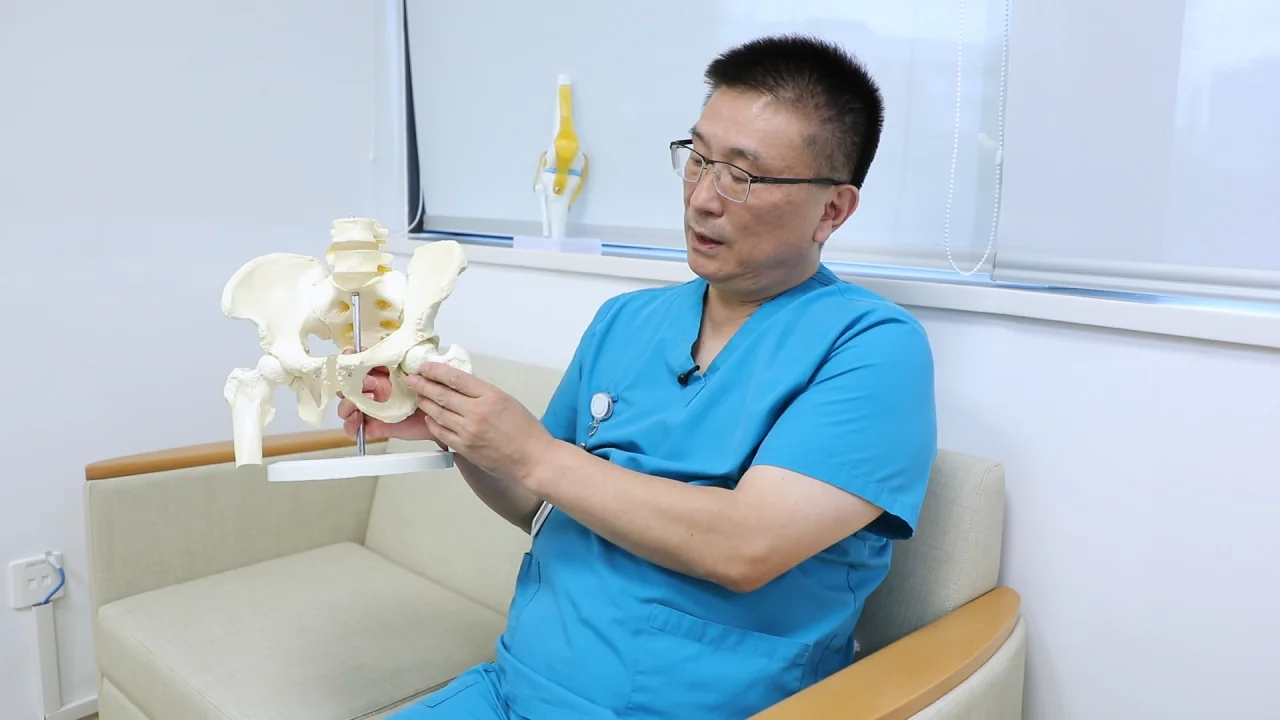
"A friend recommended Dr. Liu Wanjun, a specially appointed orthopedic expert at Jiahui International Hospital," Wu Hua recalled from her bed. "When I looked him up online and saw that he specializes in hip replacement and revision, I thought — this is exactly who I need. I booked his clinic almost without hesitation."
More Than Coordination: Surgery Designed Around an Elderly Patient
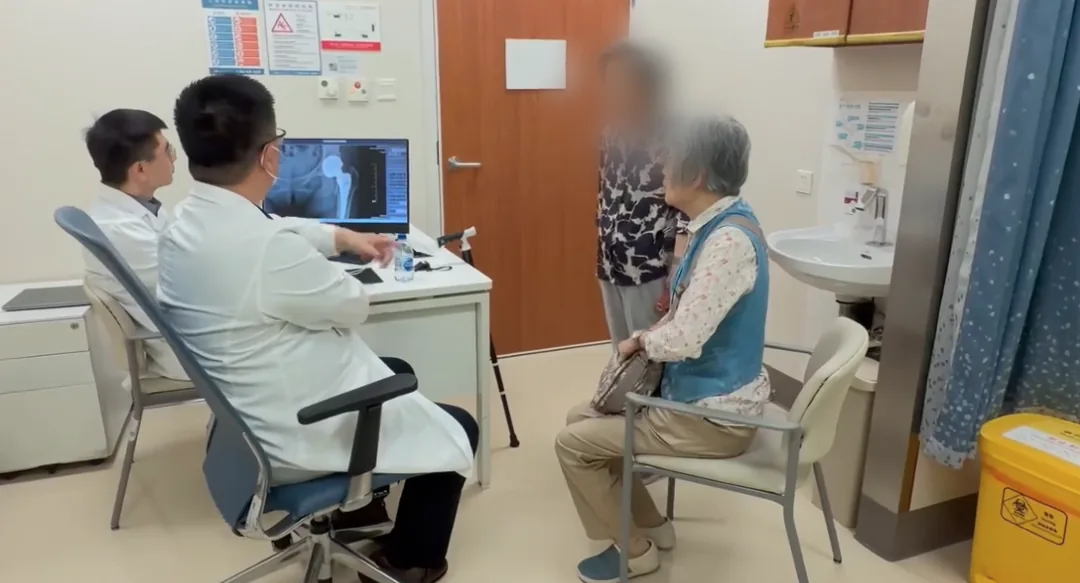
After imaging studies, Dr. Liu immediately identified the root of the problem. The metal prosthesis implanted 18 years earlier had worn down over time, releasing large numbers of metal particles. This triggered a particle reaction that, in turn, caused bone resorption around the acetabulum (the hip socket) and loosening of the prosthesis.
"Complications like these are not only insidious — even when they are identified, surgeons without enough experience may hesitate to operate. It is very easy to miss the optimal window for treatment." — Dr. Liu Wanjun, after the surgery
Worn and loosened, the prosthesis meant that Wu Hua would need hip revision surgery. After a rigorous evaluation, Dr. Liu prepared two plans: Plan A, a partial revision replacing only the loosened and worn components; and Plan B, a backup full revision, in case the femoral stem was also found to be loose.
Another unknown factor was the patient's advanced age. "I was quite frightened," Wu Hua recalled after surgery. "It had been eighteen years since my last operation. And the older you are, the higher the surgical risk and the slower the recovery."
In response, the Jiahui team launched a multidisciplinary collaboration — from laboratory testing to anesthesia — conducting a detailed pre-operative assessment tailored to her situation, in order to rule out any absolute contraindications to surgery. After careful evaluation, Dr. Liu's team decided to proceed with a partial hip revision: a less invasive approach with faster post-operative recovery, and therefore better suited to an elderly patient.
Tracking Down a Part That No Longer Existed
Soon afterward, Dr. Liu led the hip surgery at Jiahui International Hospital. The critical step was removing the prosthesis that had been implanted 18 years earlier. As Dr. Liu later recalled, the original manufacturer had long since gone out of business — and the dedicated extraction tools had vanished along with it.
The Jiahui team tracked down former employees of the original company and recovered the tools from that era. With them, the team completely removed the old prosthesis and implanted a new ceramic prosthesis, precisely completing the acetabular reconstruction. Post-operative imaging showed that the acetabular reconstruction was complete and the screws were well fixed, with limb length, abduction angle, and other parameters all restored to normal ranges.
Recovery, One Small Step at a Time
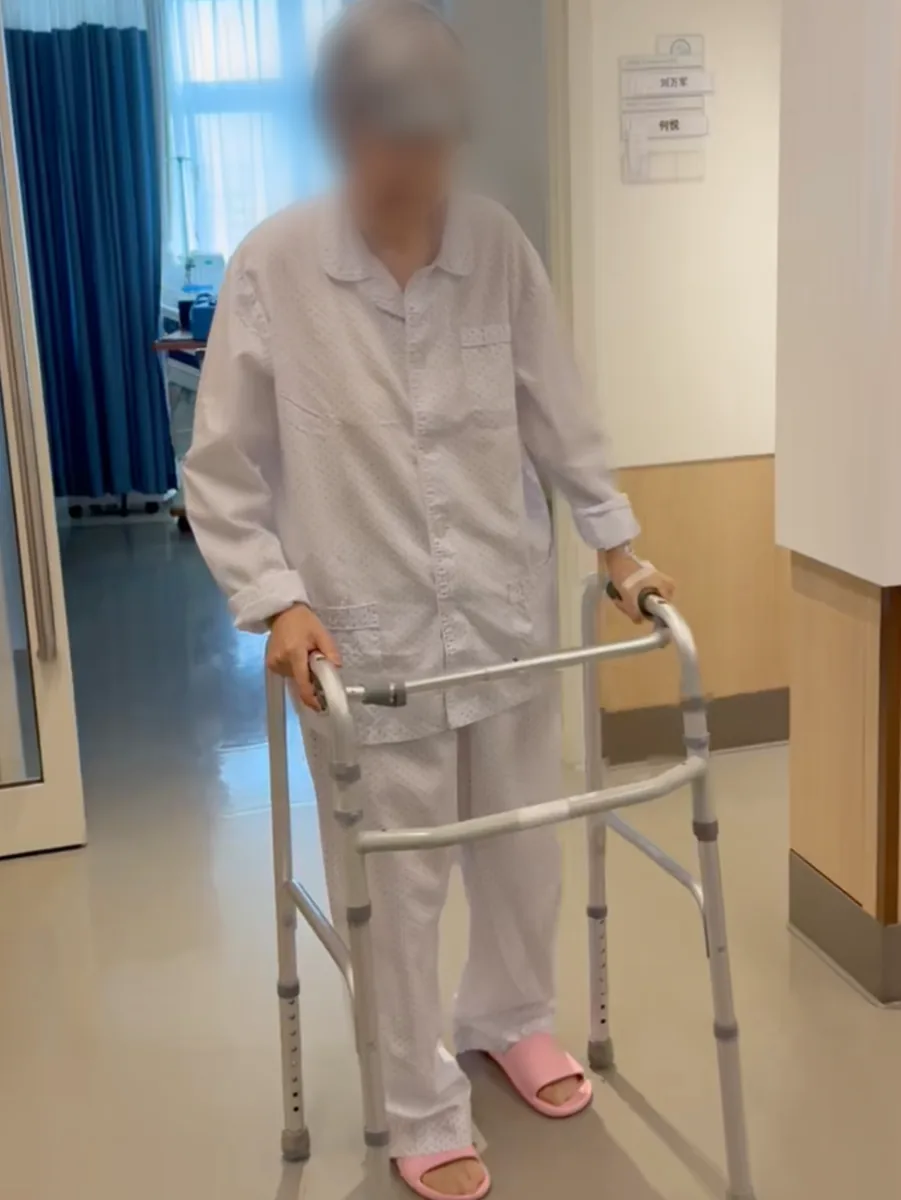
On the evening of the second day after surgery, Wu Hua began walking under the guidance of a rehabilitation therapist. "Getting out of bed was truly not easy," she said. "But I could go to the bathroom on my own. Today is a little better than yesterday — and that's already a big step. I'm truly grateful to the Jiahui medical team."
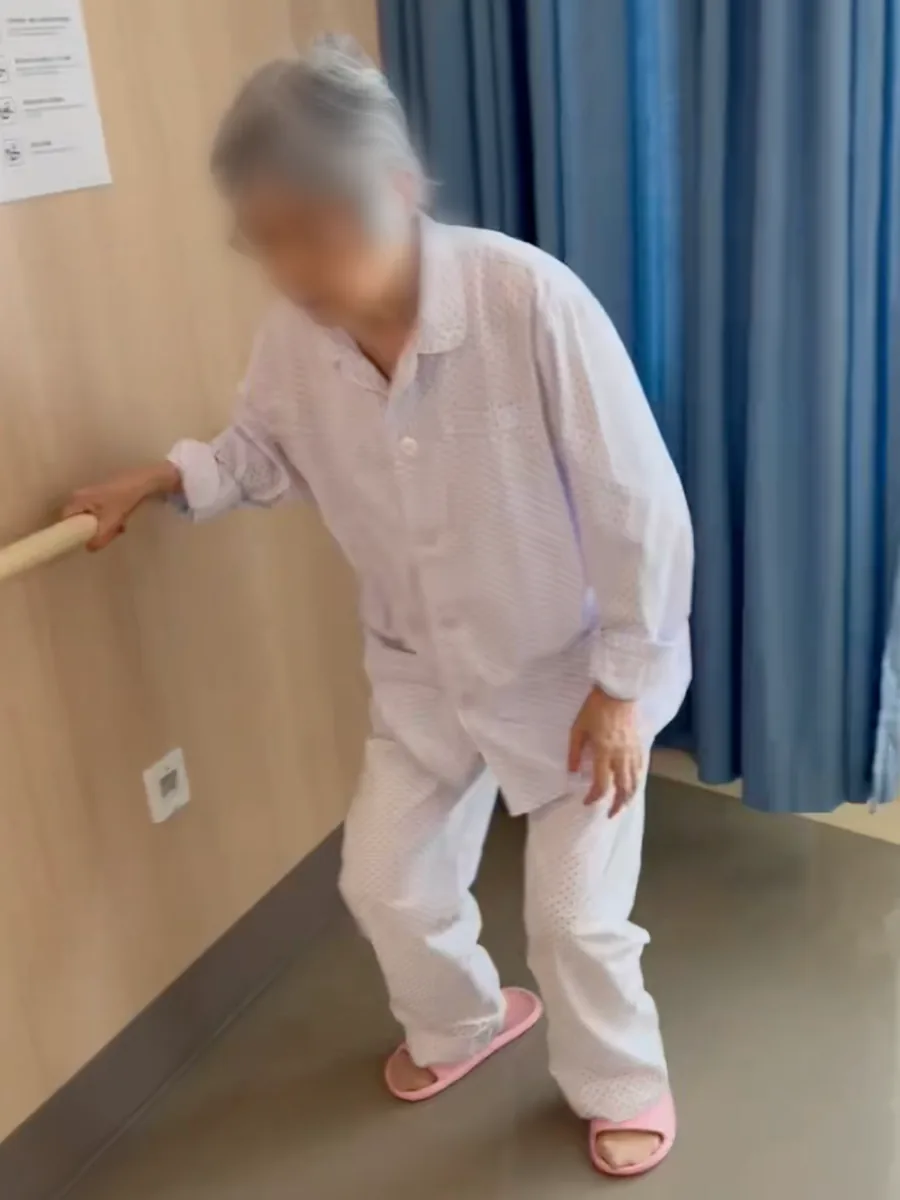
At her one-month follow-up, Wu Hua could already walk and squat independently, and the pain she had felt before surgery had gone. Expressing her gratitude to Dr. Liu, she added: "I'm confident that things will keep getting better."
A Shanghai Woman Living Alone — Clear-Eyed and at Peace
Before deciding on surgery, Wu Hua went through her own inner struggle. "Everyone feels anxious when something happens — how could I not be anxious about this leg?" she said from her ward. "But this is Auntie's philosophy: anxiety is anxiety — you slowly learn to accept it, and then you let it go."
"Take this operation. I thought about it too — it was possible that I might not make it off the operating table. You can't say that's impossible. At first I was very anxious. Then I turned it around: if something went wrong during surgery, it wouldn't necessarily be a bad thing — because I would go without pain. That's not so bad either. Once I saw it that way, I felt that every day of being alive was a happy one, that each day was a day I'd gained — and I slept peacefully."
Beyond Dr. Liu's outstanding expertise in hip surgery, another reason Wu Hua agreed to the operation was her hope for the quality of life ahead. "Even though I'm old, I still want to be able to take care of myself. I don't ask for much — just to be able to walk, to get to the supermarket, the park, and the hospital."
Although her son, daughter-in-law, and grandson are long settled in Japan, they flew back to Shanghai to care for her during the surgery. Yet as an elderly woman who has lived alone for years, Wu Hua does not depend on her children at all — she even admits that she enjoys her solitary life in Shanghai. In her daily life she loves watching TV dramas and writes reviews; her account has more than 300 followers. "When I was young, I suppose I was a bit of an artsy type — I read Agatha Christie's entire collection. Now that I'm older, I can't read as much, so I watch dramas instead. But I'm still an artsy old lady."
On why she chose Jiahui, Wu Hua was candid: "My pension isn't high, but I still chose Jiahui. I'm at that age where I don't know what tomorrow looks like — so I should be a little kinder to myself. Actually, many older people in Shanghai are well-off but reluctant to spend. It's not that I'm rich — it's just that I choose to be kinder to myself."
"That is life — you accept it, and then you make peace with it." Her words capture, precisely, the clear-eyed grace of this Shanghai woman who lives alone.
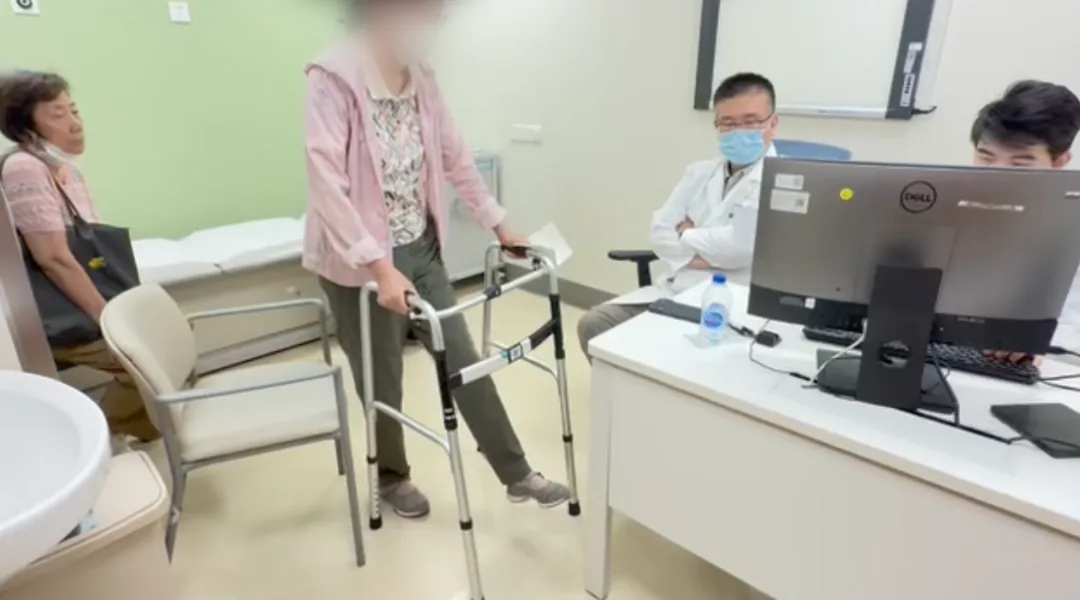
At her one-month follow-up, Wu Hua could walk and squat on her own — the pain from before surgery was gone.
What This Means for International Patients
- Complex revision expertise. Hip revision after a worn or failed prosthesis is one of the most demanding procedures in orthopedics — Jiahui's specialists perform it with internationally benchmarked technique.
- Multidisciplinary safety for older adults. Pre-operative assessment spanning laboratory testing, anesthesia, and internal medicine is standard, so that even high-age, higher-risk patients are evaluated thoroughly before surgery.
- Solutions when standard options run out. When the usual route is blocked — even when the original manufacturer no longer exists — the team keeps looking until it finds a way.
- Whole-person recovery. Rehabilitation begins within days of surgery, and each patient's goals and pace are respected.
Complex Orthopedic Needs? A Dedicated Team, Built Around You.
From hip replacement and revision to joint preservation, Jiahui's orthopedic specialists combine internationally benchmarked technique with whole-person care. Contact us to learn more.
Request a ConsultationDisclaimer: This article is based on content originally published by Jiahui Healthcare (嘉会医疗) on WeChat. Patient details are shared with consent and have been anonymized. This content does not constitute medical advice.