
GENEVA — From September 15–17, 2026, at the World Trade Organization (WTO) 2026 Public Forum, a session titled “Medical Tourism: Opportunities and Challenges in Services Trade” drew the attention of delegates from around the world. Dr. John K. Hsiang (项乃强), Chairman of the Management Executive Committee of Jiahui Health, took the floor as the only representative of a Chinese healthcare institution invited to the session, presenting the latest trends in China's inbound medical tourism — and Jiahui's own best practices — so that the story of inbound medical care in China could be heard and seen by the world.
The Numbers Behind China's Inbound Medical Boom
The data Dr. Hsiang cited sketch a sector that has entered a high-growth channel. In 2025, key foreign-patient-facing hospitals in China recorded 1.28 million international patient visits, up 73.6% from three years earlier; of these, 413,000 visits were made by patients who traveled to China specifically for treatment, a 63% year-on-year increase.
At Jiahui International Hospital alone, overseas patient consultations in the first half of 2026 nearly doubled compared with the same period last year.
The economic pull-through effect is equally significant: every RMB 100 million of direct medical tourism revenue generates an estimated RMB 230 million of output in related industries. In 2025, China's travel services exports reached RMB 393.98 billion, up 49.5% year-on-year — with medical tourism emerging as one of the new growth engines.
Three Forces: Policy, Visas, and Pharmaceutical Innovation
Behind this growth, Dr. Hsiang identified three converging drivers: China's top-level policy design, visa facilitation reform, and a burst of pharmaceutical innovation.
- Policy: In March 2026, nine government departments jointly issued sixteen measures to expand inbound consumption, explicitly supporting inbound health spending and the development of international medical tourism clusters.
- Visas: Citizens of 57 countries can now enter China visa-free through 65 open ports of entry for stays of up to 240 hours.
- Innovation: China now accounts for 33.7% of new drugs in global development — the largest share worldwide — and its share of original, first-in-class pipelines has reached about 24%, second in the world, up from only 4% a decade ago. In 2025, China's National Medical Products Administration approved a record 76 innovative drugs. In June 2026, the world's first approved solid tumor CAR-T therapy — developed in Shanghai — was granted approval; the same month, the world's first bispecific antibody-drug conjugate (ADC), iza-bren (BL-B01D1), was approved for recurrent and metastatic nasopharyngeal carcinoma.
These innovations, Dr. Hsiang noted, are precisely why a growing number of overseas patients are now traveling to China for treatment.
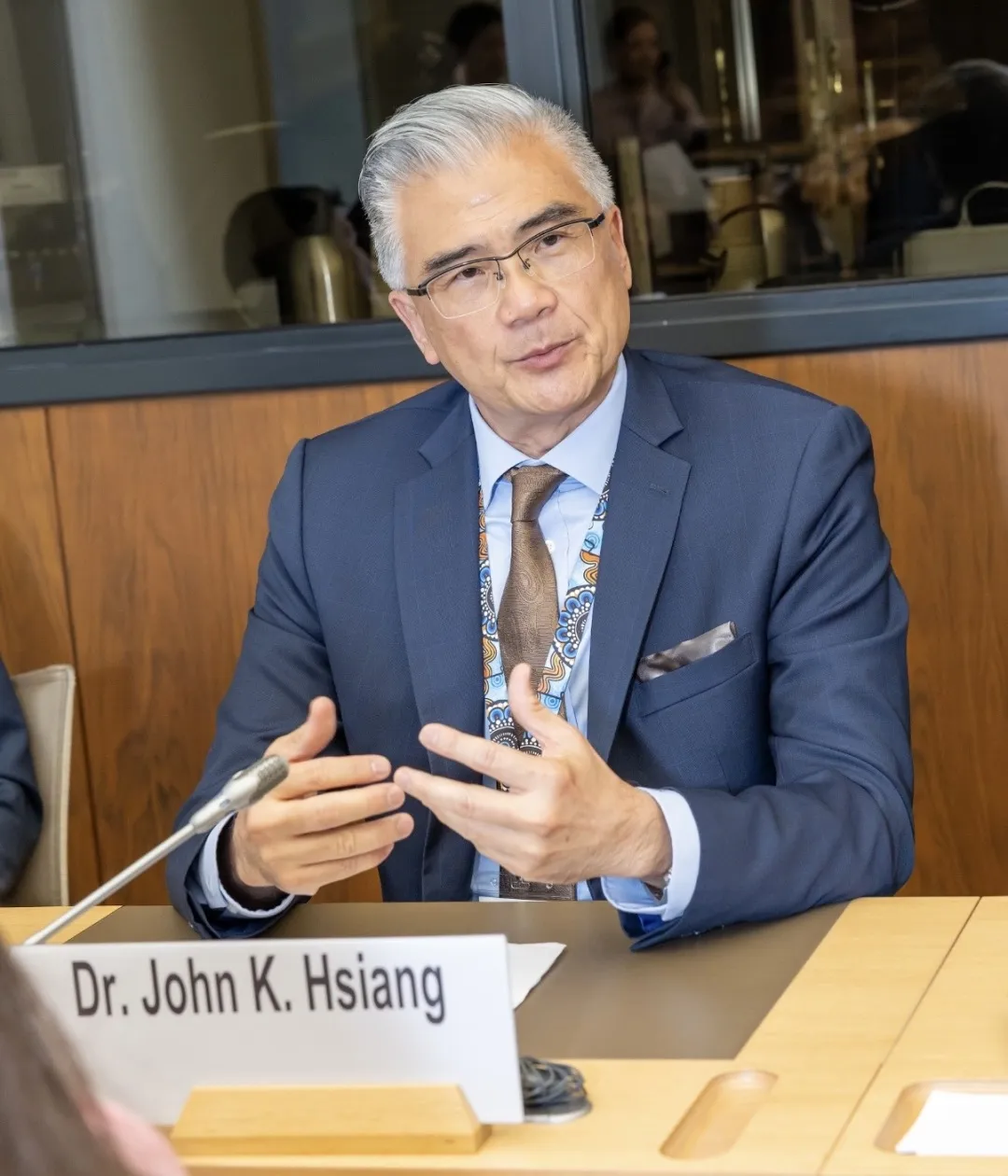
Dr. John K. Hsiang, Chairman of the Management Executive Committee of Jiahui Health, at the WTO 2026 Public Forum.
Case One: 9,000 Kilometers for the World's First Solid Tumor CAR-T
The first case Dr. Hsiang shared took place in July 2026. A patient from New Zealand with advanced cancer flew to Shanghai on the visa-free policy just days after the world's first solid tumor CAR-T therapy was approved in China. On August 16, 2026, he was successfully discharged from Jiahui International Hospital as the first overseas patient to receive the therapy — leaving the hospital with his suitcase, and a Chinese jade peace buckle gifted by his care team.
For the full story, see: First Foreign Patient Completes Solid Tumor CAR-T (CT041) at Jiahui and Discharges Successfully.
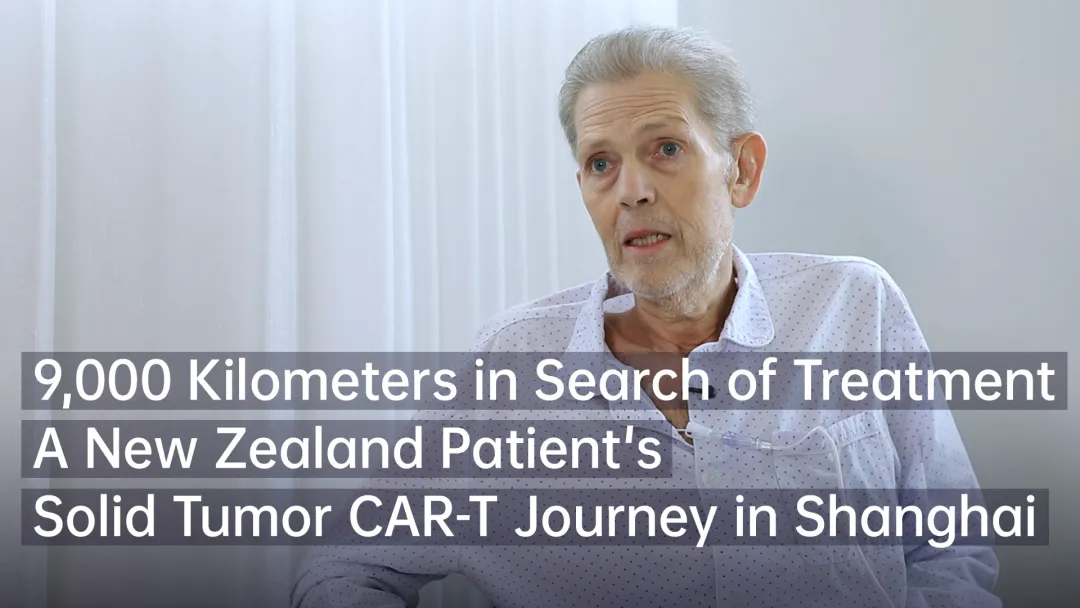
9,000 kilometers in search of treatment — the New Zealand patient's solid tumor CAR-T journey in Shanghai.
Case Two: A U.S. Patient Referred by His MD Anderson Physician
Even earlier, a patient from the United States with non-small cell lung cancer (NSCLC) traveled to Jiahui on the recommendation of his treating physician at MD Anderson Cancer Center, to receive ivonescimab — an innovative therapy approved at that time only in China.
During treatment, the patient developed a severe immune-related adverse event and was transferred to the intensive care unit in critical condition. Jiahui International Hospital organized multiple rounds of multidisciplinary consultations with internal and external experts — including Professor Zhou Caicun (周彩存) of Shanghai East Hospital (affiliated with Tongji University), the principal investigator of the drug. Thanks to emergency management and intensive care, the patient's condition was soon stabilized.
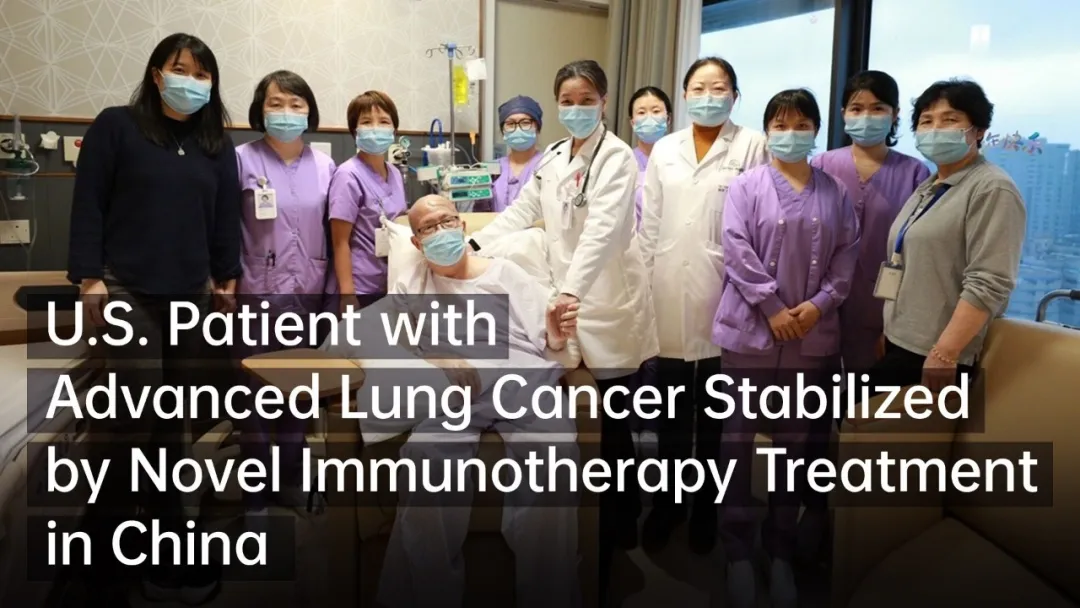
The U.S. patient with advanced lung cancer, stabilized by novel immunotherapy in China, with his Jiahui care team.
From “going abroad for treatment” to “coming to China for care” — behind this reversed flow stands the confidence and warmth of Chinese innovation and clinical capability.
Global Media Takes Notice
This new trend has been captured by authoritative international media. On September 6, 2026, The Wall Street Journal reported on overseas patients flying to Shanghai for innovative cancer treatment, with reporters traveling to the city to interview Jiahui and industry peers; on September 2, 2026, the Chinese business magazine Caijing published its own coverage. The story of inbound medical care in China is now being seen by more readers at home and abroad.
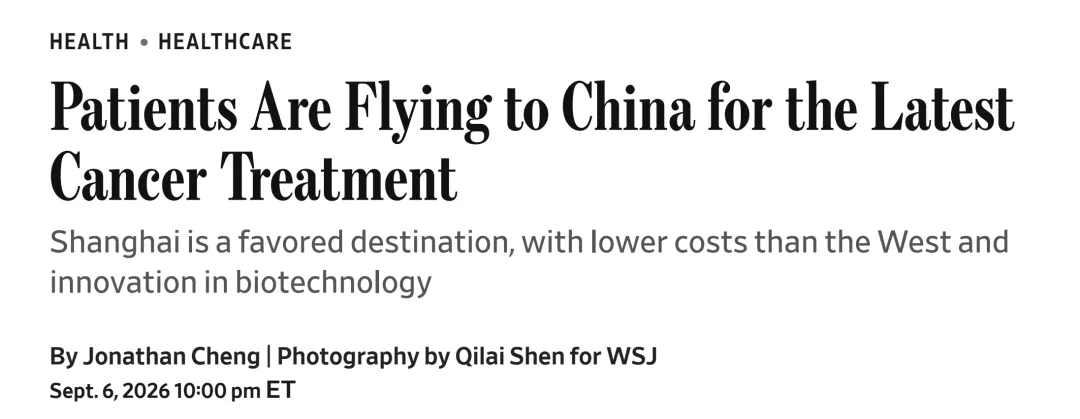
The Wall Street Journal, September 6, 2026: “Patients Are Flying to China for the Latest Cancer Treatment.”
An Open Platform Linking Chinese Innovation and Global Patients
Both cases, Dr. Hsiang said, are part of Jiahui's active response to the Shanghai municipal government's goal of building an international medical tourism destination. Jiahui International Hospital is the first comprehensive international hospital authorized by the Shanghai Municipal Health Commission, one of the first institutions authorized for international medical tourism pilots, and a designated medical services provider of the China International Import Expo (CIIE) for nine consecutive years. In 2025, foreign patient outpatient visits at Jiahui International Hospital exceeded 100,000 — the highest in the city for consecutive years.
In July 2026, Jiahui Health was also named a localization and internationalization innovation partner by Yicai (China Business News) — the only medical institution selected this year. More than a single medical institution, Jiahui is developing into an open platform that integrates upstream and downstream industries, connects partners, spans education and research, and blends multicultural services — a bridge linking Chinese innovation with patients around the world.
Two Proposals for a Connected Future
At the WTO, Dr. Hsiang put forward two proposals:
- Establish a dedicated “medical visa” so that international patients can come to China and receive treatment with greater ease and peace of mind.
- Build an integrated, authoritative information platform that makes it easy for overseas patients to learn about China's latest medical and pharmaceutical innovations.

Dr. John K. Hsiang at the WTO Public Forum 2026 — “Powering the Future”.
He also suggested that the WTO could play a more active role in promoting international standards for medical visas, building a global medical innovation information network, and facilitating dialogue on cross-border medical data and telemedicine regulation.
“In the next three to five years, China's inbound medical tourism will enter a period of rapid expansion. China has the confidence and the capability to become a leading global destination for medical tourism.”
Considering Treatment in China?
Jiahui's international patient team can review your medical records and help you plan your visit to Shanghai.
Request a ConsultationDisclaimer: This article is based on a news post originally published by Jiahui Healthcare (嘉会医疗) on WeChat. The article is for informational purposes only and does not constitute medical advice, diagnosis, or treatment recommendations. Treatment decisions should be made by qualified physicians based on individual patient circumstances.
References
- Jiahui Healthcare (嘉会医疗). 为什么是嘉会在WTO舭台上向世界分享中国入境医疗? [Why Jiahui? Sharing China's Inbound Medical Care Story with the World on the WTO Stage] WeChat post, September 18, 2026.
- The Wall Street Journal. Patients Are Flying to China for the Latest Cancer Treatment. September 6, 2026.
- National Medical Products Administration (China). Approval announcements for the world's first solid tumor CAR-T therapy and the world's first bispecific ADC (iza-bren / BL-B01D1). June 22, 2026.
- National Immigration Administration (China). Visa-free entry and 240-hour transit policy update. August 20, 2026.