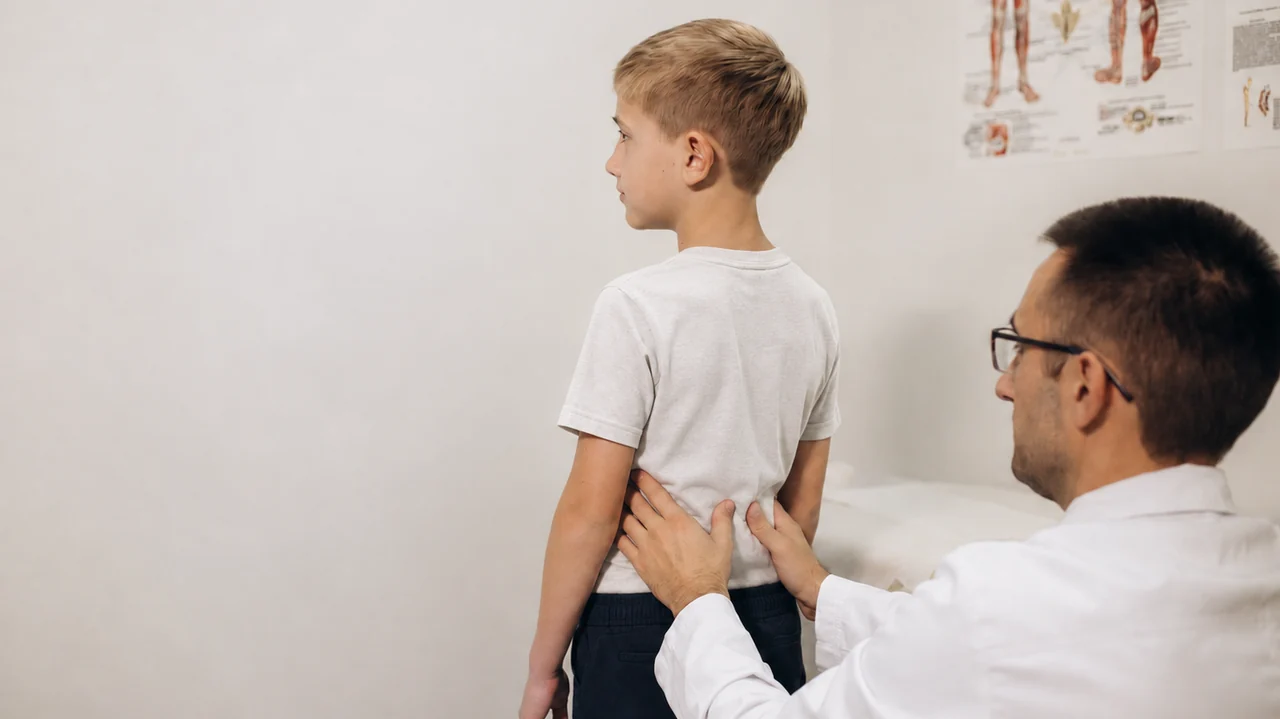
A healthy skeleton is the foundation of a healthy body. Yet the joints and bones of children do not always announce that something is wrong. Some conditions that should be treated early are instead discovered late, when the result is no longer as good as it could have been.
This is the quiet difficulty of pediatric orthopedics. A congenital deformity may be subtle enough that parents do not notice it. An abnormality that develops later, during growth, may not look like a problem at all. But with early detection, early diagnosis and early treatment, most of these children do very well.
Below, Dr. Wang Sun — a senior pediatric orthopedics specialist at Jiahui Health — walks through what parents should be watching for at each stage of childhood, from the first weeks of life to the teenage growth spurt.
Why Pediatric Bone Problems Are So Easy to Miss
Adults notice pain. Children often do not report it, cannot describe it precisely, or simply adapt. A child with a mildly abnormal gait or an asymmetric posture may run and play like any other child, while the underlying problem continues to develop.
There is a second reason, too: many of these conditions are not painful at all in the beginning. Hip dysplasia, flat feet, a growth plate disturbance or an early spinal curve can all be silent. What eventually brings a family to a clinic is often a photograph, a school screening, or a relative who noticed something.
The message from Dr. Wang is that observation is a legitimate part of parenting, not an overreaction: know what each age looks like, and when something does not match, have it checked by a professional.
The Newborn Period
Visible limb differences
Some abnormalities are apparent on sight, without any medical training. These include congenital limb deficiency, extra fingers or toes, fused fingers or toes, torticollis, pectus carinatum and pectus excavatum. When treated early, the results are usually good — which is why a visible difference at birth deserves a specialist opinion rather than a wait-and-see approach.
Injuries related to a difficult delivery
Complicated labour can leave its own marks: a fractured clavicle, a brachial plexus injury, or cerebral palsy, in which one side or one limb does not move normally and looks asymmetric compared with the other side.
Posture versus true deformity
It also matters to distinguish a postural moulding caused by the baby's position in the womb from a genuine skeletal deformity. Clubfoot is the classic example: the foot may simply be turned inward from crowding, or the deformity may be real and require treatment. The distinction is not one parents can reliably make alone.
Hip screening
Hip screening in infancy picks up developmental dysplasia of the hip and hip dislocation — conditions that are very easily overlooked. The signs include asymmetric skin creases on the inner upper thighs and unusual movement or clicking at the hip joint. Because a dislocated hip may cause no pain at all, screening is what protects a child from a problem that could otherwise only be corrected with much more invasive surgery later.
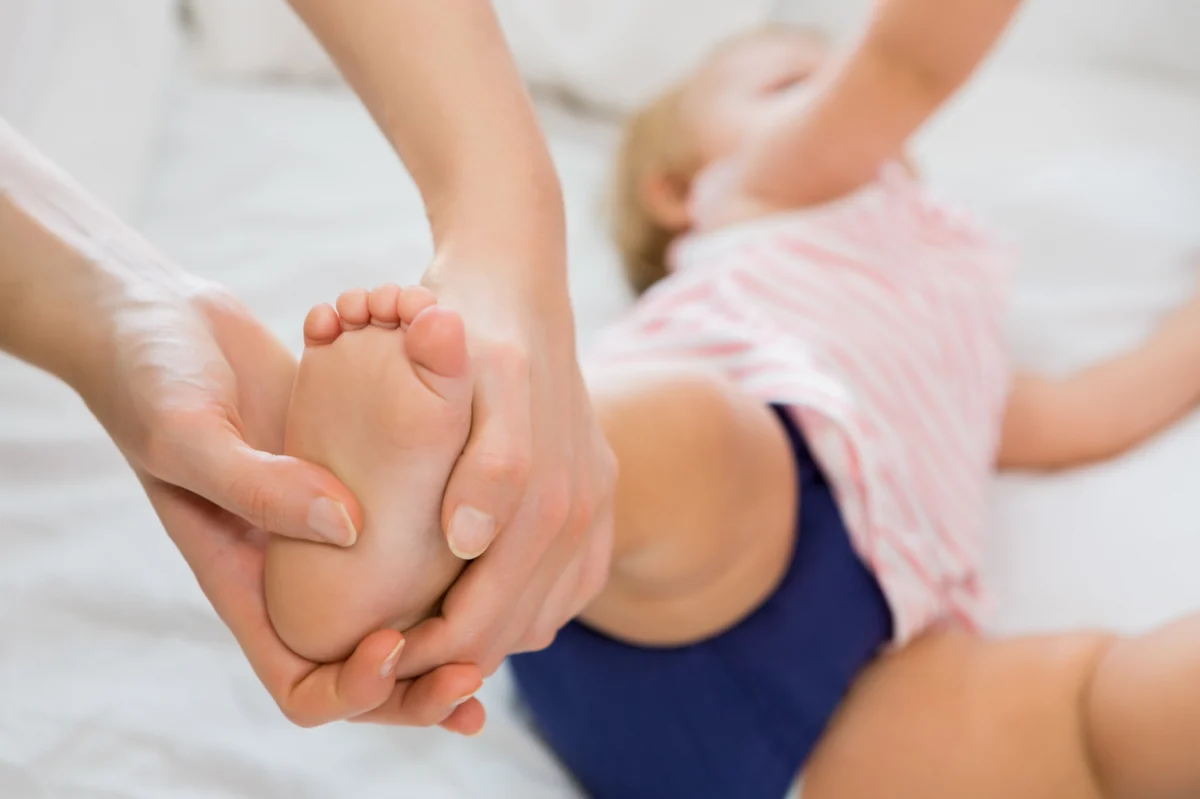
Hip screening in the first months of life: a dislocated hip is painless, so examination — not symptoms — is what finds it.
The Toddler Years: Learning to Walk
Once a child begins to walk, the way they walk becomes a diagnostic tool. Parents are in the best position to notice change, because they see the child every day.
Walking late
A child who walks noticeably later than expected should be assessed for muscle strength and tone, and in particular for symmetry between the two sides. Cerebral palsy and poliomyelitis can both present this way, and cognitive development should be reviewed at the same time.
Baby walkers
Dr. Wang is direct on this point: baby walkers do the skeletal and muscular development of a young child no good at all. They encourage a posture the child is not yet ready for, and they carry a well-documented injury risk.
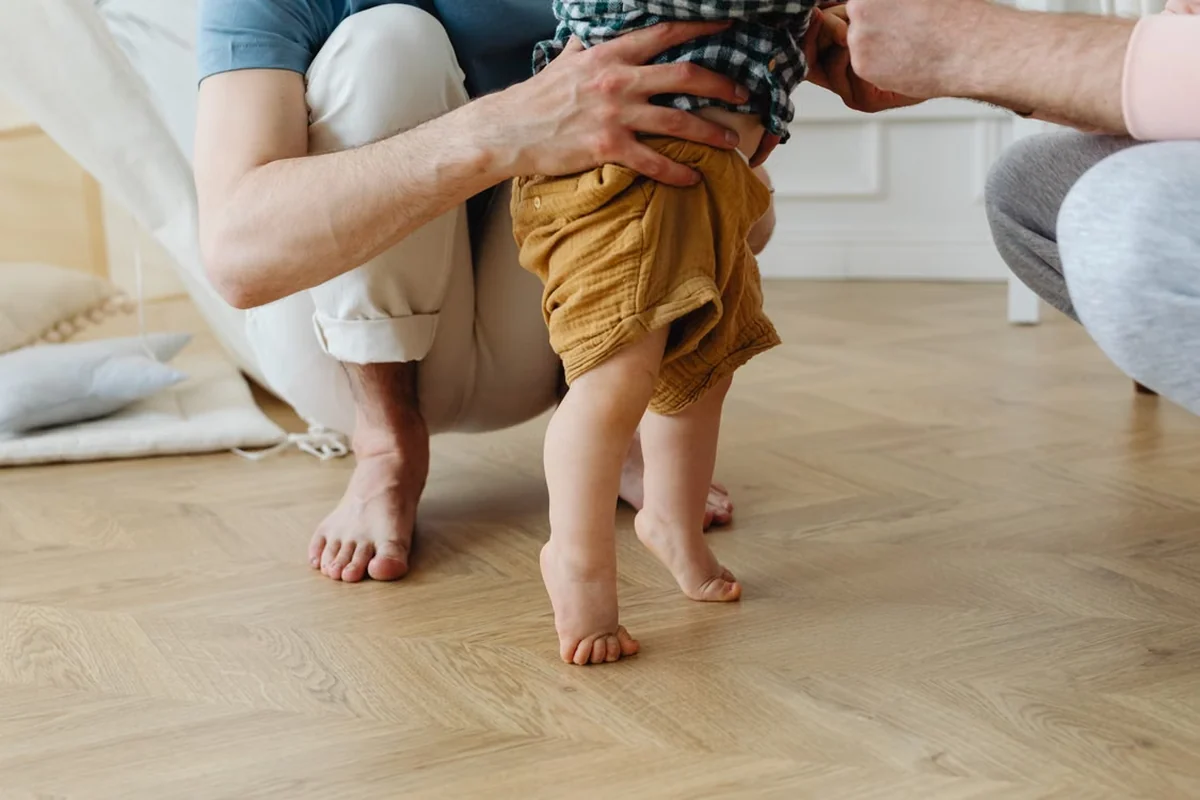
Learning to walk is a developmental milestone worth watching closely — late walking, or asymmetry between the two sides, deserves assessment.

Baby walkers are best avoided: they do not help a child walk sooner and they do not help the developing skeleton.
Leg shape and gait
Bow legs and knock knees are both very common at this age and are usually part of normal development. What matters is the direction of travel over time, and whether the pattern is symmetric.
Gait deserves the same attention. A limp, or a waddling gait, should be reviewed promptly so that a dislocated hip can be excluded.
The Preschool Years
After the age of three, a few specific details become more important.
Bow legs persisting beyond three years should be examined carefully for a growth plate disorder — the physis is the part of the bone that lengthens, and disturbance there can produce a deformity that does not resolve on its own.
Posture and sitting habits also matter. Kneeling with the legs folded under the body, and sitting cross-legged for long periods, both place considerable stress on the joints of the lower limb.
Knock knees, meanwhile, are more common than most parents expect: in children between two and four years old, the proportion is above fifty percent. Most improve with growth, but the degree and the symmetry are what a clinician will assess.
Flat feet should not be judged in isolation. They are closely related to how lax a child's ligaments are, to muscle tone, and to the presence of knock knees — which is why an assessment looks at the whole lower limb rather than the arch alone.
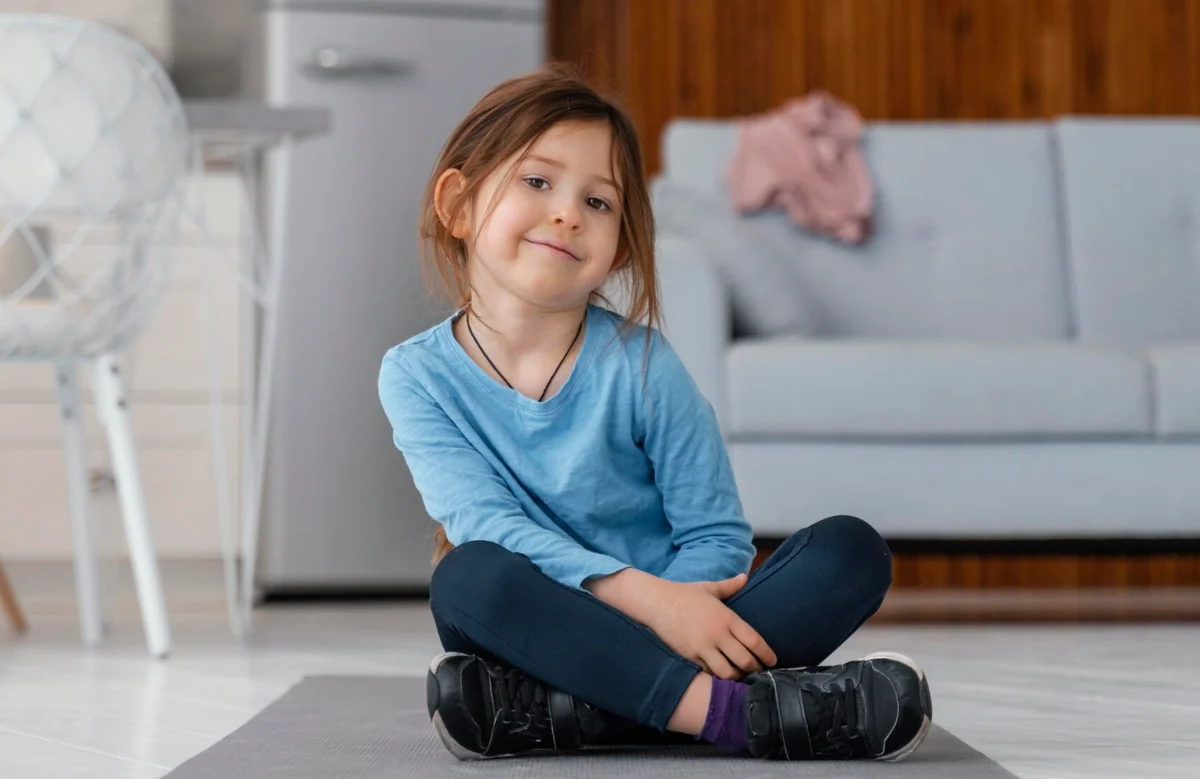
Sitting habits matter: prolonged kneeling or cross-legged sitting loads the joints of the lower limb.
The Primary School Years
Paroxysmal torticollis
Episodes of a tilted, stiff neck at this age may be related to repeated upper respiratory infections. They are usually transient, but recurrent episodes should still be reviewed.
Growing pains
Growing pains are very common in this age group and are associated with calcium metabolism, sports injuries and fatigue. The important distinction is between the familiar ache of growing pains and pain that is one-sided, wakes a child at night, or is accompanied by swelling — which needs assessment rather than reassurance.
Hip pain
Hip pain in a school-age child deserves particular care. Legg-Calvé-Perthes disease — the loss of blood supply to the head of the femur — must be considered, while transient synovitis of the hip needs to be excluded. In Perthes disease, how quickly the condition is recognised affects how well the hip joint ends up.
Limb fractures
Fractures of the limbs are especially common in this age group, which is one reason pediatric orthopedic services see so many children during school terms and holiday play.
Gluteal muscle contracture
There is a pattern worth knowing, because it is easy to misinterpret. A child walks with the feet turned outward, more obviously when running. When squatting, the hips cannot flex beyond a certain point, and the child either falls backward or must spread the knees widely to squat at all. Sometimes, when sitting, one leg cannot be crossed over the other. A history of repeated intramuscular injections of penicillin dissolved in benzyl alcohol in early childhood points to the same diagnosis: gluteal muscle contracture.
Adolescence
Idiopathic scoliosis
Adolescent idiopathic scoliosis is very easily missed, and it is more common in girls. The earliest visible sign is usually uneven shoulder height — which is why it is often noticed in summer, when clothing is lighter. A forward bend test, a school screening, or a photograph taken from behind will show it sooner than any complaint of pain.
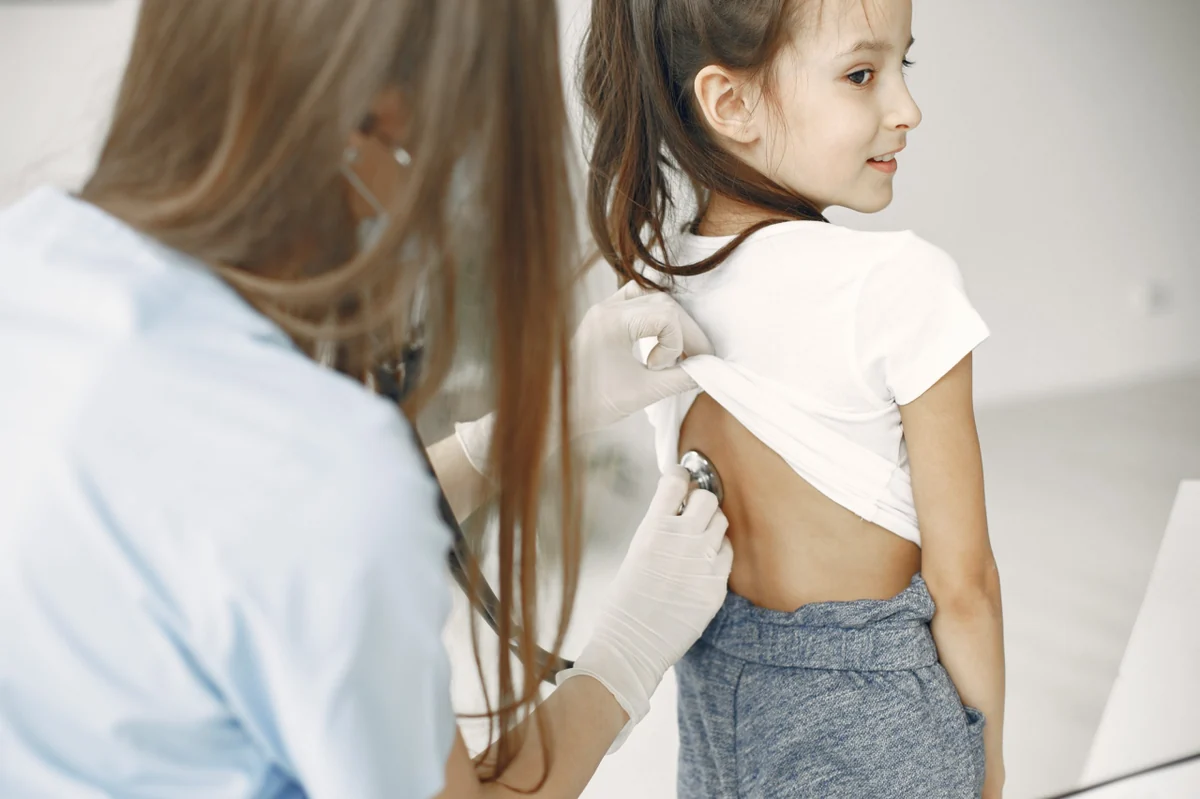
Uneven shoulders are the earliest visible sign of adolescent idiopathic scoliosis, which is more common in girls.
Bone tumours
Tumours of the skeletal system — and malignant tumours in particular — are becoming proportionally more frequent, and adolescence is the age at which they most often appear. The typical presentation is a persistent, localized ache. The shape of the limb may look completely normal, which is exactly why pain that does not settle should be imaged rather than watched.
From school age onward, persistent localized bone pain — even with a normal-looking limb — is a reason to seek imaging.
What Early Detection Actually Changes
Dr. Wang returns to a single principle: pediatric skeletal health depends on early detection, early diagnosis and early treatment.
Many of these problems begin as small differences — in posture, in gait, in how a child moves or sits. They are easy to overlook at home, and they can affect the way a child's skeleton develops for the rest of their life. The practical advice is simple: pay attention to physical changes as they appear, and treat a persistent difference as a reason to have it looked at, not as something to wait out.
For most of these conditions, the treatment itself is not complicated. The window in which treatment works best is.
What This Means for International Patients
Families travelling to Shanghai for a pediatric orthopedic opinion usually arrive with two questions: does this need treatment, and does it need it now. A well-prepared first visit answers both.
- A specialist clinic, not a general pediatric visit. Jiahui's pediatric orthopedics service covers congenital deformity correction, gait and posture assessment, growth plate problems, hip conditions and spinal deformity, with imaging available on site.
- Bring the growth record and the photographs. Height and weight over time, a few photographs taken from behind and from the side, and any previous X-rays are far more useful than a single measurement taken on the day of the visit.
- Plan for follow-up, not a single appointment. Many pediatric orthopedic conditions are managed by observation over months or years, with treatment timed to growth. Remote review of interval X-rays and photographs can usually be arranged for families who return home.
About the Author

Wang Sun, MD
Chief Physician, Pediatric Orthopedics (Visiting Specialist) · Jiahui Health
Dr. Wang Sun is a chief physician and a visiting specialist in pediatric orthopedics at Jiahui Health. He is a member of the Pediatric Orthopedics Group of the Chinese Medical Association's Pediatric Surgery Branch, and deputy head of the Pediatric Orthopedics Working Group of the Shanghai Medical Doctor Association's Orthopedics Branch. He has practised pediatric orthopedics for more than 30 years and currently works in the Department of Orthopedics at Shanghai Children's Hospital, affiliated with Shanghai Jiao Tong University School of Medicine. His expertise covers fractures and injuries of the limbs in children, correction of congenital deformities including torticollis, clubfoot, polydactyly, syndactyly and hip dislocation, the management of cerebral palsy, bone tumours and tumour-like conditions, and soft-tissue masses of the limbs such as haemangioma and lymphangioma.
A Second Opinion on Your Child's Growth and Gait
Jiahui's pediatric orthopedics team offers assessment of posture, gait and limb deformity, with imaging and long-term follow-up planning — including remote review of X-rays and photographs before you travel. Our international patient team speaks more than 20 languages.
Request a ConsultationDisclaimer: This article is based on content originally published by Jiahui Healthcare (嘉会医疗) on WeChat and reviewed by Dr. Wang Sun. It is intended for general health education and does not constitute medical advertising, diagnosis or treatment advice. For diagnosis and treatment, please consult a physician in person.