
NBI "Eagle Eye" Surgery: A Special Light That Leaves Bladder Cancer Nowhere to Hide
At Jiahui International Hospital, narrow-band imaging (NBI) is transforming bladder tumor surgery by revealing hidden lesions that ordinary white light cannot see.
SHANGHAI — Under the operating lights, every minute can reshape a life. At Jiahui International Hospital, the urology team is using a technology called NBI (Narrow-Band Imaging) to make bladder cancer surgery clearer, more precise, and safer.
Known among surgeons as the "eagle eye," NBI acts like a special filter that exposes the abnormal blood-vessel patterns created by cancer cells. For bladder cancer patients, this can mean the difference between a tumor that is fully removed and one that is left behind.
"NBI gives us a much clearer battlefield map during bladder tumor surgery. It helps us see lesions we might otherwise miss, and that directly improves outcomes for our patients."
From Foggy View to High-Definition Map
Imagine a bladder cancer patient undergoing minimally invasive surgery. Under conventional white light, the mucosal surface looks pink and healthy. Several obvious tumors are removed. Then the surgeon presses a button.
The screen shifts from color to a high-contrast copper-green tone. Suddenly, flat red patches, subtle abnormal vessels, and tiny satellite lesions that were invisible moments before come into view.
"These areas need treatment too," the surgeon says. Those early cancers, camouflaged as normal tissue under white light, are now exposed.
This is the power of the NBI system.
What Is NBI? A "Smart" Light That Reads Cancer's Footprints
NBI is a narrow-band imaging technology that filters white light into two specific wavelengths: blue light at approximately 415 nm and green light at approximately 540 nm.
These wavelengths are highly absorbed by hemoglobin in blood, making blood vessels stand out with exceptional clarity:
- 415 nm blue light highlights the capillaries in the most superficial mucosal layer, revealing the finest vascular networks.
- 540 nm green light penetrates slightly deeper, showing the vessels in the submucosal layer.
Cancer cells have a defining weakness: they need enormous amounts of nutrients. To feed themselves, they stimulate the growth of chaotic, twisted, dense new blood vessels. These abnormal vascular networks are the "footprints" cancer leaves behind — and NBI is designed to make them visible.
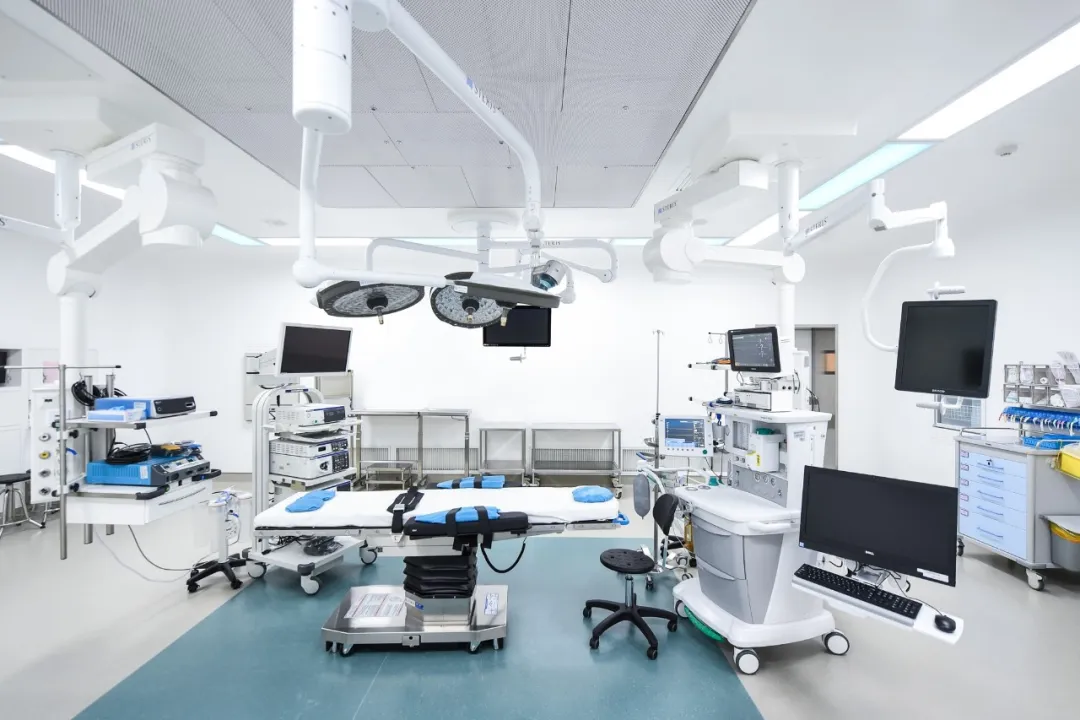
Jiahui's modern operating suites are equipped for precision urologic surgery
Three Ways NBI Changes the Patient Experience
For patients, NBI is not just a technical upgrade. It translates into three practical benefits:
1. See More: Fewer Missed Lesions
Flat-growing early bladder cancers, especially high-risk carcinoma in situ, are easily missed under standard white light. Studies show NBI can improve detection of these lesions by over 20%, helping patients avoid "successful-looking" surgeries that leave hidden cancer behind.
2. Cut More Precisely: Tumor-Level Clearance
Surgery is not only about removing the visible tumor. It is about defining its true boundary. NBI acts like a highlighter, marking the tumor's real extent and surrounding satellite lesions. Surgeons can then remove the disease completely while preserving as much healthy tissue as possible.
3. Judge More Clearly: Less Unnecessary Trauma
Some suspicious areas are benign inflammation or reactive changes. NBI provides vascular-pattern evidence that helps surgeons distinguish benign from malignant tissue in real time, reducing unnecessary biopsies or cautery and the anxiety that comes with them.
Precision instruments and advanced imaging work together in Jiahui's urology surgery program
Real-Time NBI Guidance During TURBT at Jiahui
At Jiahui International Hospital, NBI is not used only for diagnosis before or after surgery. The hospital's dedicated NBI camera can be mounted directly on the cystoscope and resectoscope, enabling real-time intraoperative NBI guidance during transurethral resection of bladder tumor (TURBT).
This means the surgeon can switch between white light and NBI modes at any point during the procedure, continuously verifying the resection margin and checking for additional lesions. This integrated approach improves the completeness and safety of bladder tumor surgery.
Of course, even the most advanced tool depends on the surgeon who uses it. NBI images require specialized training to interpret, and the final diagnosis always remains based on pathology. But when combined with an experienced team, NBI gives both doctors and patients a clearer, more confident path forward.
Jiahui International Hospital Urology Department
The Urology Department at Shanghai Jiahui International Hospital brings together an experienced clinical team providing comprehensive care for benign and malignant urinary conditions. Services include disease screening, diagnosis, minimally invasive surgery, and multidisciplinary tumor management.
The department manages conditions affecting the male and female urinary systems and male reproductive organs, ranging from kidney stones and urinary incontinence to urologic cancers and male sexual health. For international patients, Jiahui provides multilingual coordination, private consultation environments, and a seamless care pathway from remote review to postoperative follow-up.
Considering Urologic Surgery at Jiahui?
Contact our international patient team to arrange a remote consultation with Jiahui urology specialists. We can review your records, discuss surgical options, and coordinate your visit.
Request a ConsultationDisclaimer: This article is for general informational purposes and does not constitute medical advice. Surgical approaches and suitability for NBI-guided procedures should be determined by a qualified urologist based on the individual patient's diagnosis, imaging, and overall health status. Please consult a medical professional for personalized recommendations.