"Ten years ago, The New England Journal of Medicine published one research article from a Chinese scholar. This year, it has published more than twenty. China will play an increasingly important role in cell therapy." — Prof. Eric J. Rubin, Editor-in-Chief, The New England Journal of Medicine
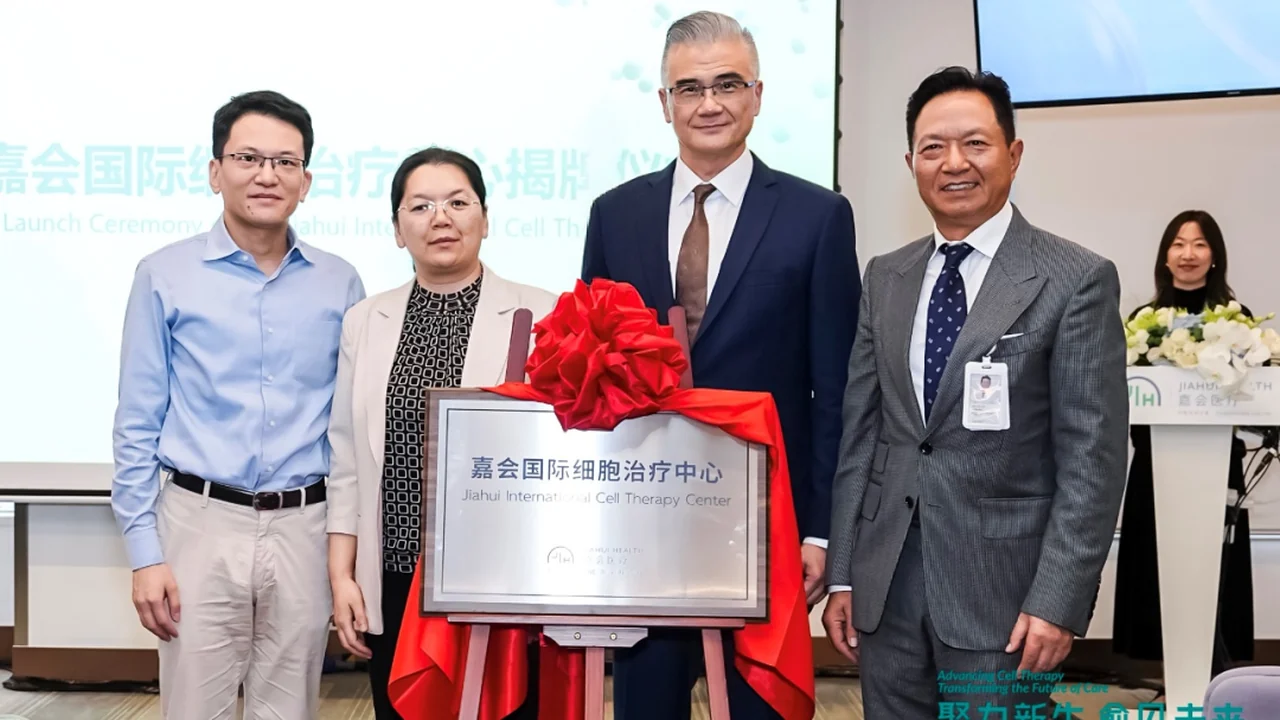
SHANGHAI — On October 23, 2026, Jiahui International Hospital hosted the first Jiahui International Cell Therapy Summit, co-organized with Jiahui Medical Research and Education Group (J-Med). The day brought together clinicians, immunologists and international academic leaders to review where cell therapy stands today — and closed with the formal unveiling of the Jiahui International Cell Therapy Center.
The summit was livestreamed globally, with physicians, medical students, international healthcare professionals, patients and family members from 14 countries and regions registering to watch online.
Among those taking part: Dr. Xiang Naiqiang, Chairman of the Executive Committee of Jiahui Medical Management; Prof. Wu Haishan, President of Jiahui International Hospital; Prof. Eric J. Rubin, Editor-in-Chief of The New England Journal of Medicine and professor at the Harvard T.H. Chan School of Public Health; Prof. Xu Huji, Director of Rheumatology and Immunology at the Second Affiliated Hospital of Naval Medical University (Shanghai Changzheng Hospital); Prof. Xiao Xiuying, Director of Medical Oncology at Renji Hospital, Shanghai Jiao Tong University School of Medicine; Prof. Xu Pengpeng of Ruijin Hospital, a specialist in lymphoma; Prof. Hao Siguo, Director of Hematology at Jiahui International Hospital; and Dr. Xuan Linli, Director of Medical Oncology at the Jiahui International Cancer Center.
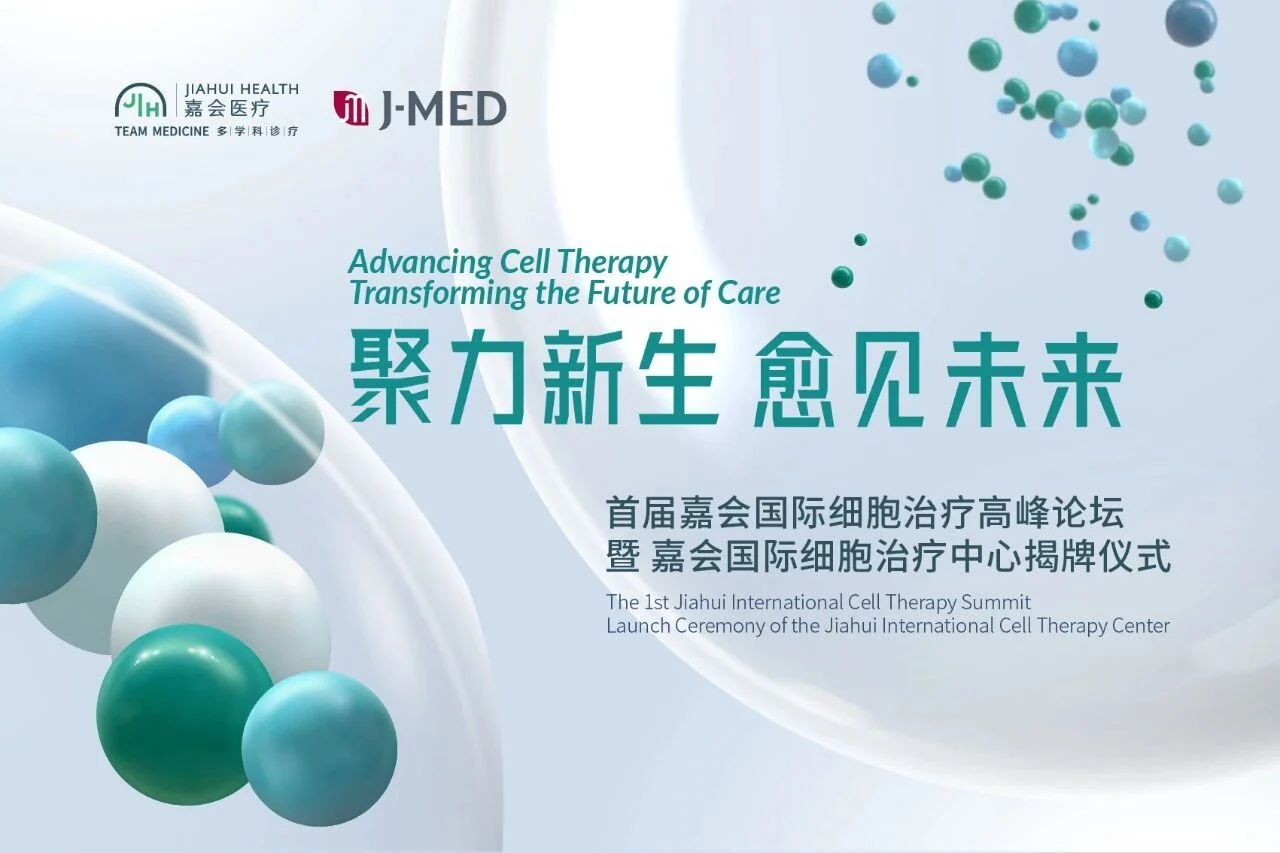
The first Jiahui International Cell Therapy Summit, held in Shanghai on October 23, 2026.
Why China, and Why Now
In his opening address, Dr. Xiang Naiqiang pointed to a combination of factors — a large patient population, fast regulatory review, the return of overseas-trained talent and comparatively lower R&D costs — that has accelerated China's capacity for innovative drug development and clinical translation.
"In June 2026, the world's first CAR-T therapy for solid tumors was approved in Shanghai — a milestone that marks China's transition, in this frontier field, from technology follower to global contributor. Cell therapy has enormous potential in cancer and autoimmune disease, and with high national medical standards and broad international collaboration, China is positioned to play a larger role still." — Dr. Xiang Naiqiang, Chairman of the Executive Committee, Jiahui Medical Management
He also drew a direct line between China's innovation pipeline and a shift in patient behavior: "As China's innovative drugs and frontier therapies reach the clinic faster, demand from international patients is growing. Inbound medical care is moving from 'seeing a doctor while travelling' to 'travelling specifically to see a doctor.'" Meeting that demand, he said, requires hospitals to raise the standard of cross-border care so that more patients worldwide can access China's innovations conveniently and safely.
Nine Years, 180 Countries
Prof. Wu Haishan, President of Jiahui International Hospital, framed the new center against the hospital's own trajectory: over the past nine years, Jiahui International Hospital has provided roughly 500,000 patient visits a year, serving patients from 180 countries and regions.
"More and more international patients are coming to China for advanced treatment options — and that is a major reason we established the International Cell Therapy Center. The center will comply strictly with national medical regulation and follow the principles of evidence-based medicine, while holding to Jiahui's core values: Care, Quality and Impact." — Prof. Wu Haishan, President, Jiahui International Hospital
He described the center as a key step in Jiahui's continuing work on precision medicine, multidisciplinary collaboration and the standardized application of frontier therapies — connecting the latest research, at home and abroad, with day-to-day clinical practice through the hospital's integrated platform.
What Cell Therapy Actually Is
Cell therapy uses living cells as the therapeutic agent. Depending on the approach, the goal may be to replace or repair damaged tissue, to eliminate abnormal cells, or to reset a pathological immune response. Over the past decade the field has moved from laboratory promise into routine clinical use in three broad areas:
- Hematologic cancers — CAR-T therapy for relapsed or refractory lymphoma, leukemia and myeloma, alongside hematopoietic stem cell transplantation.
- Solid tumors — a newer and harder frontier, where engineered T cells must penetrate and survive inside the tumor microenvironment.
- Autoimmune disease — including off-the-shelf and in-vivo CAR-T approaches that are being studied in lupus, systemic sclerosis and other refractory conditions.
The Science on the Agenda
Five academic reports anchored the day, each addressing a live question in the field:
- Universal and in-vivo CAR-T — clinical research and progress. Prof. Xu Huji, Shanghai Changzheng Hospital
- Cell therapy for solid tumors — clinical advances and the bottlenecks that remain. Prof. Xiao Xiuying, Renji Hospital
- Diffuse large B-cell lymphoma — clinical and translational research. Prof. Xu Pengpeng, Ruijin Hospital
- Cord blood transplantation in malignant hematologic disease. Prof. Hao Siguo, Jiahui International Hospital
- CAR-T in the real world — long-term infection control and management. Dr. Xuan Linli, Jiahui International Cancer Center
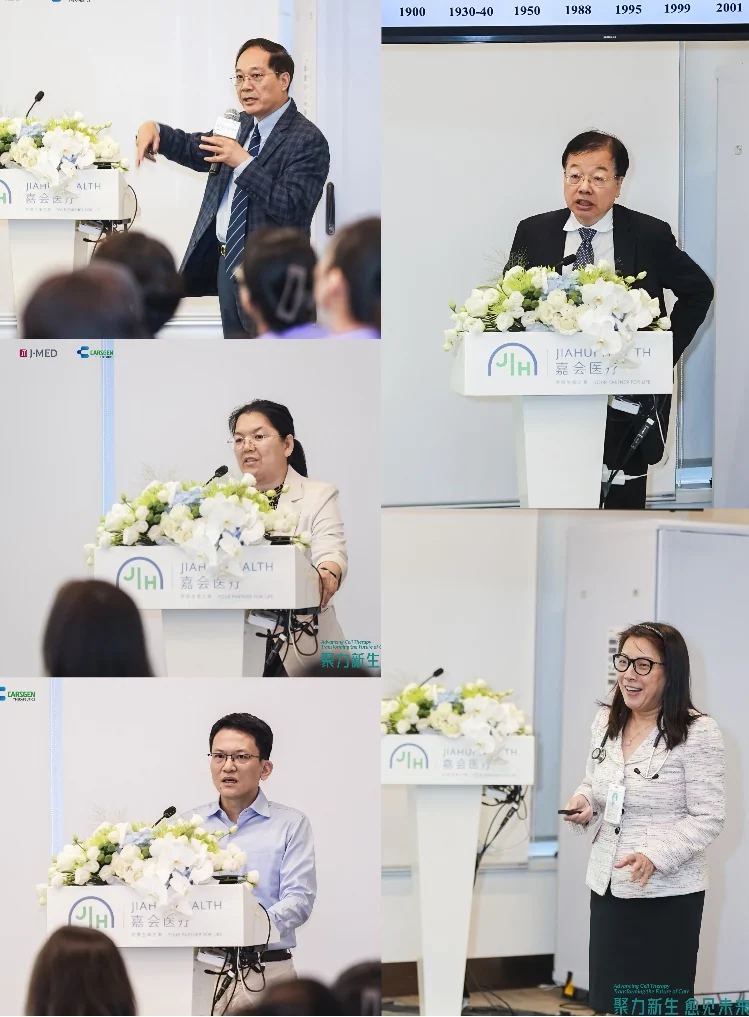
Academic sessions at the summit, covering universal CAR-T, solid tumors, lymphoma, cord blood transplantation and real-world CAR-T management.
A Track Record Built With International Patients
The center is not a start from zero. Jiahui's oncology team has been treating international patients with CAR-T since September 2023, when the first foreign patient in China to receive axicabtagene ciloleucel CAR-T therapy was discharged from the Jiahui International Cancer Center.
Since then, the center has provided CAR-T treatment to patients from Singapore, Hong Kong (China), Russia, Hungary, New Zealand, India, Pakistan and the Maldives, among other countries and regions.
After the world's first solid-tumor CAR-T therapy was approved in China in June 2026, Jiahui became one of the first medical institutions to offer it clinically — and treated the first international patient in the world to receive that therapy.
The team has also been sharing its experience outward. In May 2026, the Jiahui International Cancer Center ran a dedicated online training program for more than 360 physicians in Saudi Arabia on "Advances in Frontier Cancer Treatment: CAR-T Innovation and Full-Cycle Clinical Management," covering the foundations of CAR-T clinical management and the outlook for innovative cell therapies.
What the Center Will Offer International Patients
Going forward, the International Cell Therapy Center will work from cell therapy regimens already approved in China, matched to each patient's condition and the relevant indications, and will build out a continuous, full-pathway service on top of Jiahui International Hospital's multidisciplinary platform:
- Pre-treatment assessment — eligibility review, disease staging and fitness evaluation before any commitment to therapy.
- Cell collection (apheresis) — performed in-house, with coordination between hematology, oncology and the cell-processing laboratory.
- Infusion and inpatient care — administered in a monitored inpatient setting with intensive-care support available.
- Adverse-event monitoring — structured surveillance and management of cytokine release syndrome (CRS), neurotoxicity (ICANS) and infection risk.
- Long-term follow-up — post-treatment review and remote follow-up, so patients can continue monitoring after returning home.
The center will also draw on Jiahui's existing strengths in multilingual services, cross-cultural communication and international patient management — the practical infrastructure that determines whether a complex therapy is genuinely accessible to someone arriving from another country.
What This Means for International Patients
- Access to therapies not yet available at home. China's regulatory pathway has, in several cases, moved faster than those in other markets — including the world's first approved solid-tumor CAR-T therapy.
- Documented international experience. Jiahui's CAR-T program has already treated patients from eight countries and regions, with the language, logistics and follow-up arrangements that entails.
- A full pathway, not a single procedure. Assessment, collection, infusion, complication management and follow-up are coordinated by one team rather than fragmented across providers.
- Multidisciplinary backup. Complex cases are reviewed across hematology, oncology, immunology, critical care and supportive services.
- Continuity after you go home. Structured remote follow-up is part of the model, not an afterthought.
Patients and families considering cell therapy should note that eligibility depends on diagnosis, disease status, prior treatments and general health, and that outcomes vary between individuals. A remote review of medical records is the usual first step.
Considering CAR-T or Another Cell Therapy?
Send us your diagnosis, pathology report and treatment history. Our international patient team will arrange a remote review with Jiahui's hematology and oncology specialists.
Request a Remote ConsultationDisclaimer: This article is based on content originally published by Jiahui Healthcare (嘉会医疗) on WeChat. It is provided for general information and does not constitute medical advice or a promise of treatment outcome. Eligibility for any cell therapy is determined by the treating physician after a full clinical assessment.