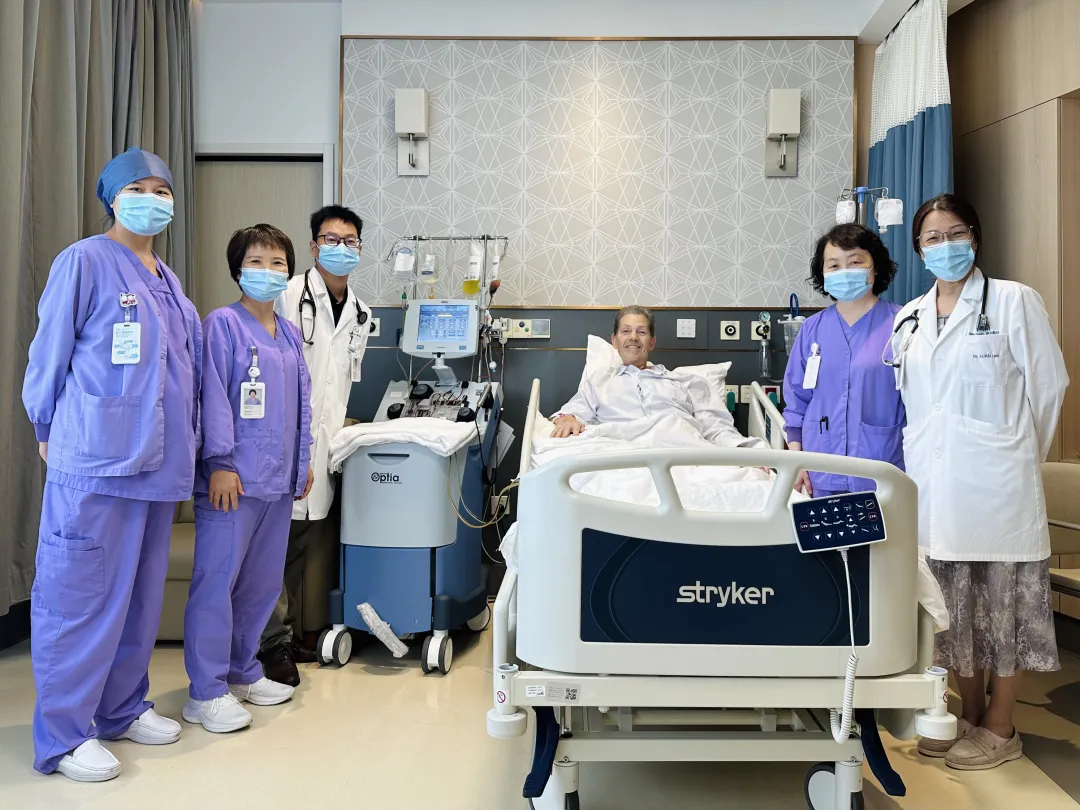
SHANGHAI — On July 6, 2026, Jiahui International Cancer Center (JICC) announced that a 59-year-old male patient from New Zealand had successfully completed T-cell apheresis for CT041 (Satri-cel), the world's first approved solid tumor CAR-T therapy. This marks the first time a foreign patient has undergone T-cell collection for this breakthrough therapy in China — a milestone for both Jiahui and China's cell therapy ecosystem.
CT041, also known as Satri-cel or舒瑞基奥仑赛注射液, was approved by China's National Medical Products Administration (NMPA) on June 22, 2026, making it the world's first CAR-T product indicated for solid tumors. Jiahui International Hospital is among the first institutions approved to deliver this innovative therapy.
The Patient's Journey to Jiahui
The New Zealand patient was diagnosed with gastroduodenal adenocarcinoma and had received standard treatment locally with limited success. As the tumor continued to progress and better options became unavailable at home, the patient searched globally for emerging therapies.
Through online research, he learned that the world's first solid tumor CAR-T therapy was about to be approved in China, and that Shanghai Jiahui International Hospital was one of the first medical centers prepared to offer it. Jiahui's experience in CAR-T therapy for international patients — including cases from Singapore, the United States, New Zealand, and Russia — further supported his decision to travel to Shanghai for care.
Why CLDN18.2 Mattered
Before traveling to China, the patient worked with the Jiahui team to complete biomarker testing for CLDN18.2 and HER2 expression in New Zealand. The results were highly encouraging: CLDN18.2 expression reached 95%, a strong match for CT041's indication profile.
Taking advantage of New Zealand citizens' 30-day visa-free entry to China, the patient traveled to Shanghai and began the treatment process under the care of Jiahui's multidisciplinary oncology team.
"We are honored to be among the first institutions worldwide to offer this pioneering solid tumor CAR-T therapy. Unlike many healthcare systems where hematologic and solid tumor treatments are separated, Jiahui International Cancer Center is built as a one-stop oncology platform. We have established standardized workflows covering biomarker assessment, cell collection, infusion management, and adverse event monitoring, and we have already accumulated extensive successful experience. We are confident in our ability to deliver personalized CAR-T treatment plans for every patient."
— Dr. Linli Xuan (宣琳丽), Director of Medical Oncology, Jiahui International Cancer Center
What Happens After Apheresis?
Apheresis is the first step of the CAR-T therapy process. The collected T cells are sent for manufacturing and expansion, after which the patient will receive the engineered CAR-T cell infusion. Throughout the entire treatment journey, the patient will remain under the close management of Jiahui's multidisciplinary team.
Key stages of the CT041 treatment pathway at Jiahui include:
- Biomarker Screening — CLDN18.2 and HER2 expression testing via IHC to confirm eligibility.
- T-Cell Apheresis — Collection of the patient's own T cells through a specialized cell-separation procedure.
- CAR-T Manufacturing — Laboratory modification and expansion of T cells to target CLDN18.2-expressing tumor cells.
- Infusion & Monitoring — CAR-T cell administration followed by structured observation and management of cytokine release syndrome (CRS) and other potential adverse events.
- Long-Term Follow-Up — Ongoing imaging, biomarker, and clinical assessment to evaluate treatment response.
About Jiahui International Cancer Center
Jiahui International Cancer Center (JICC) is part of Shanghai Jiahui International Hospital, providing internationally benchmarked, multidisciplinary cancer care for patients aged 14 and above. The center integrates medical oncology, surgical oncology, radiation therapy, pathology, radiology, and supportive care under one coordinated platform.
Beyond solid tumor CAR-T, Jiahui has already treated multiple international patients with CAR-T therapies for hematologic malignancies, including lymphoma and multiple myeloma, drawing patients from around the world who seek high-quality care at competitive cost.
Read more about CLDN18.2-targeted therapies: The Future of Gastric Cancer Treatment — CLDN18.2 Targeted Therapy & Solid Tumor CAR-T
Note: CT041 (Satri-cel / 舒瑞基奥仑赛注射液) has been approved by the National Medical Products Administration (NMPA) of China. The information in this article is based on publicly available materials and hospital disclosures. Specific treatment plans must be evaluated by qualified physicians based on each patient's individual condition.
Interested in CAR-T or CLDN18.2-Targeted Therapy?
Contact our international patient team to arrange a remote consultation with Jiahui oncology specialists. We can coordinate biomarker testing and guide you through the treatment evaluation process.
Request a Consultation