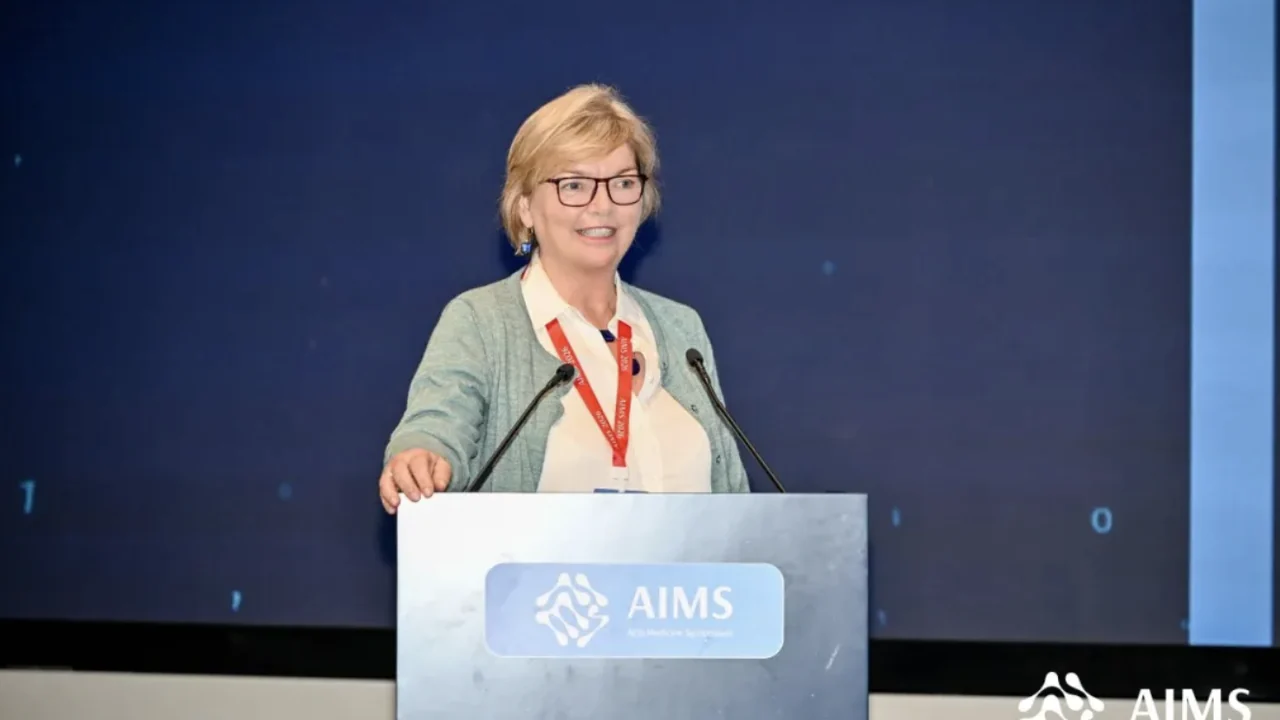
On 14 and 15 November 2026, the sixth AIMS Conference on AI in Medicine took place in Shanghai's Caohejing development zone under the theme “Advancing AI in Medicine: From Models and Discovery to Evidence and Practice”.
The meeting was jointly organised by the NEJM Group, Jiahui Medical Research and Education Group (J-Med) and the Caohejing development zone, hosted by Shanghai Jiahui International Hospital, and supported by Alibaba Health's Hydrogen Ion platform. Clinicians, AI researchers, life scientists and industry specialists gathered from China and abroad to discuss how medical AI can move from model innovation to evidence-based validation and clinical practice.
Two days, seven thematic sessions, and one question that returned in almost every discussion: how does a strong model become measurable benefit for a patient?
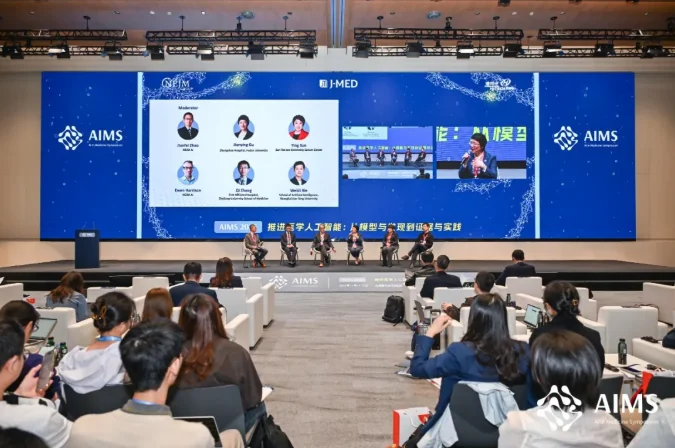
The sixth AIMS conference ran two days and seven thematic sessions in Shanghai.
Opening: The Patient Is Still the Protagonist
Professor Wu Haishan, President of Shanghai Jiahui International Hospital, said in his opening address that AIMS has spent six years pushing medical AI towards rigorous, clinical and standardised development. This year's theme, he noted, insists that strong model performance is not enough: effectiveness, safety and patient benefit must be validated in real clinical settings. Medicine remains a human endeavour, and the value of AI lies in reducing the burden on clinicians and improving the quality of care.
David Sampson, Vice President and Chief Publishing Officer of the NEJM Group, reviewed the path of medical knowledge dissemination from print to digital to generative AI, and the thinking behind the launch of NEJM AI. AI, he said, is already changing medical publishing and clinical practice, with important roles to play in diagnosis, drug development and decision support.
Session One: AI-Enabled Clinical Workflows
Professor Gu Jianying of Zhongshan Hospital, Fudan University, described the construction of an “AI-native hospital”. Supported by a national AI application pilot base, the team is building an AI Medical System that applies AI to pre-consultation intake, record generation, diagnostic support, clinical decisions and patient follow-up, combining multimodal data with clinical experience and evidence. She stressed that development must start from real clinical need and include doctors, engineers and hospital managers together, with attention to data governance, ethics and standardisation.
Professor Sun Ying of Sun Yat-sen University Cancer Center presented AI for nasopharyngeal cancer. An automatic contouring system is in use at nearly 500 hospitals across China and has served more than 1.2 million people, improving the speed and consistency of radiotherapy planning. An online adaptive radiotherapy system now integrates imaging, contouring, plan optimisation and delivery into about twenty minutes, and a phase three randomised trial is under way to test whether tumour control can be maintained while reducing radiation injury.
In the discussion that followed, speakers including Ewen Harrison, Zhang Qi and Xie Weidi returned to a shared point: model performance also depends on data quality and scale, interpretability, clinician training and system integration, and real-world patient populations may differ from development data.
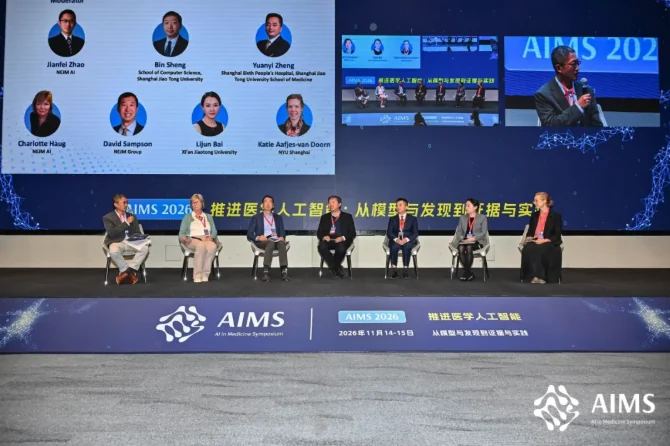
Panel discussions repeatedly returned to clinical validation and cross-disciplinary collaboration.
Session Two: Discovery and Diagnosis
Professor Shi Yu of the Second Affiliated Hospital of Zhejiang University School of Medicine presented the multimodal model MAOSS, which uses routine chest CT and clinical data to identify people at high risk of fatty liver disease and liver malignancy with sensitivity more than three times that of the traditional screening pathway. A second model, LION, detects hepatocellular carcinoma and liver metastases that radiologists may miss, acting as a safety net. The studies appeared in Nature Communications and Nature Medicine.
Charles Y. Lin, Chief Scientific Officer of Two River Bio, described both the promise and the limits of AI in drug discovery. Protein structure prediction and molecular design are strong, but insufficient biological data and biased training sets constrain the discovery of genuinely new mechanisms and targets. His team combines AI design, high-throughput experiments and iterative learning so that laboratory data continuously refine the model. AI, he said, cannot replace human judgement about clinical need, disease mechanism and research direction.
Session Three: New Technology and Clinical Translation
Ewen Harrison, Professor of Surgery and Data Science at the University of Edinburgh and a senior editor of NEJM AI, discussed AI in perioperative monitoring, risk prediction and decision support, combining surgical video, robotic data, physiological signals and wearable data. He also described a cluster randomised trial across four countries planning to enrol 13,400 pregnant women to test whether intelligent monitoring improves care. Predicting risk, he cautioned, is not the same as improving treatment decisions.
Li Meng of the Shanghai Institute of Microsystem and Information Technology described brain–computer interfaces moving from hardware connection to AI-driven decoding, including continuous multi-degree-of-freedom control and a Chinese-language decoding system called LINYU that combines invasive interfaces with a custom large language model. Wang Yao of NYU Shanghai presented physics-informed, self-supervised deep learning for low-field MRI reconstruction, which can reduce acquisition time and cost while approaching the quality of repeated scans.
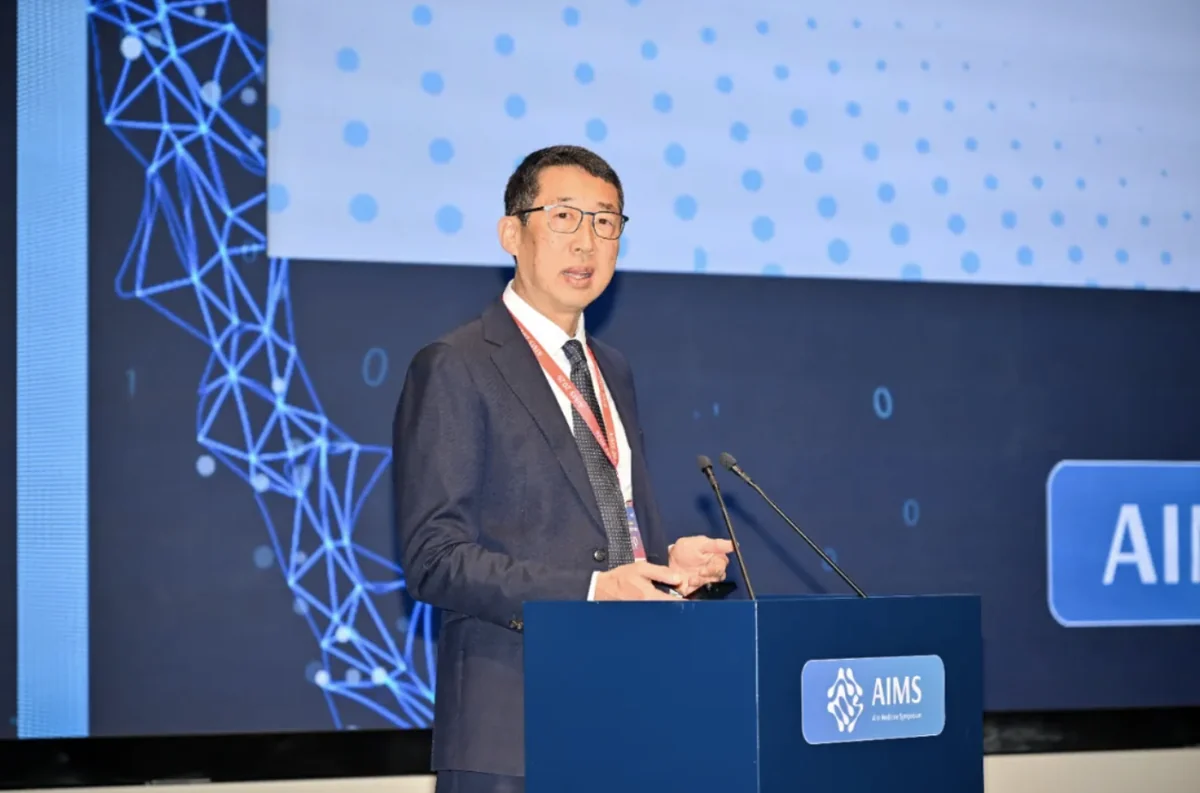
Sessions covered everything from adaptive radiotherapy to brain–computer interfaces and low-field MRI.
Session Four: Risk Prediction and Individualised Care
Professor Zhao Weili of Ruijin Hospital presented LymphMind, a multimodal model for diffuse large B-cell lymphoma that integrates PET/CT, pathology, genomics and transcriptomics to estimate the risk of progression within two years and support risk-stratified treatment decisions. Nicholas Semenkovich of the Medical College of Wisconsin showed how circulating tumour DNA in plasma and in post-operative drainage fluid can inform risk assessment in oligometastatic non-small-cell lung cancer and HPV-positive head and neck squamous cell carcinoma, and how cell-free DNA and RNA may help identify high-risk patients with sepsis.
The panel agreed that risk stratification must rest on reliable clinical and biological evidence, be tied to a specific treatment decision, and be validated prospectively. Over-interpreting a prediction can increase patient anxiety, and a model that cannot influence a decision has little practical value.
Session Five: The Next Generation of Medical AI
Professor Zhang Qi of the First Affiliated Hospital of Zhejiang University School of Medicine presented PANDA and PANDA Pro, models that detect early pancreatic lesions on routine non-contrast CT, with false positives reduced by more than half in the upgraded version. In a prospective validation study, AI-assisted screening and recall found eight pancreatic cancers missed by conventional imaging. LEAF supports liver lesion diagnosis, and the multimodal model RADAR raised readers' sensitivity by about 10% on average and cut reading time by about 30%.
Xie Weidi of Shanghai Jiao Tong University introduced DeepRare, a multi-agent diagnostic system integrating more than forty specialist tools and databases to produce traceable diagnostic suggestions, and DeepRare2 for interpreting genetic variants and re-analysing undiagnosed cases. Wang Xiangzhi of Alibaba Health described a medical AI assistant built on authoritative guidelines, journal literature and drug labels, using an evidence graph to support traceable, evidence-graded answers. Shi Qingya of Lingang Laboratory presented OriGene, a virtual disease biologist that helps generate hypotheses and experimental plans, with work on a potential liver cancer target GPR160 and dual-target CAR-T approaches to liver fibrosis.
Session Six: Clinical AI Across Specialties
Professor Ge Junbo of Zhongshan Hospital, Fudan University, and an academician of the Chinese Academy of Sciences, described CardioMind for history-taking, diagnosis and treatment decisions in cardiology, and EchoScope for automated echocardiographic assessment, alongside work on valve disease progression from ECG and AI-assisted coronary intervention.
Professor Bi Yufang of Ruijin Hospital discussed the BPROAD study published in NEJM: among 12,821 patients with type 2 diabetes and hypertension, targeting a systolic pressure below 120 mmHg reduced major cardiovascular events by 21% compared with conventional control. Because real-world control rates remain poor, her team is testing a closed-loop model that combines wearable blood pressure monitoring, continuous glucose monitoring, AI reminders, lifestyle intervention and physician adjustment.
Professor Liu Hanruo of Beijing Tongren Hospital described the four stages of translating medical AI into practice and her team's glaucoma screening system, which received a Class III medical device registration in 2022 and has been evaluated through randomised and real-world studies, including a study across 47 institutions on the carbon footprint of AI-assisted screening and follow-up.
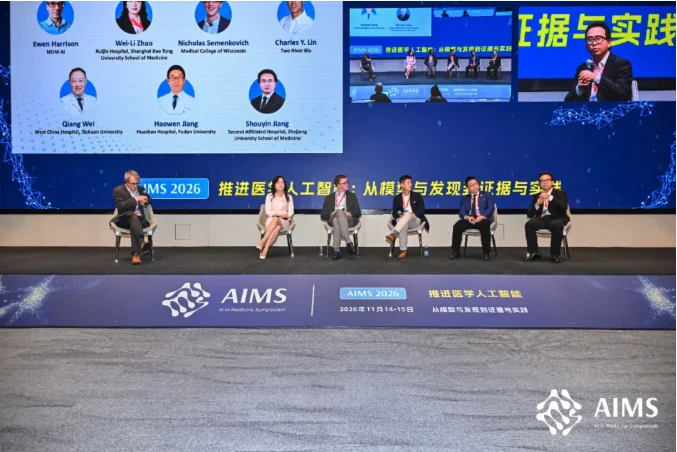
Speakers warned that scaling AI also requires attention to ethics, access and clinical skills.
Session Seven: Models, Evidence and Publishing
Professor Sheng Bin of Shanghai Jiao Tong University challenged the idea that bigger models automatically mean better care, pointing to three bottlenecks in medical AI: data collection, model construction and clinical validation. Professor Zheng Yuanyi of Shanghai Sixth People's Hospital presented ultrasound tomography for three-dimensional reconstruction of muscle, nerve, vessel and bone, a hand ultrasound system for radiation-free bone age assessment, and wearable ultrasound that detected deep vein thrombosis at a median of 9.2 days versus 16.8 days in a randomised pilot.
Charlotte Haug, Editor-in-Chief of NEJM AI, discussed large language models in scholarly publishing. Since its launch in 2024, NEJM AI has maintained an acceptance rate of about 7%. Language editing and literature tools are welcome, she said, but use must be disclosed and authors remain responsible for the conception of the research and interpretation of results. AI can help with author verification and misconduct screening while creating new problems such as fabricated authors and results.
In her closing address, Dr. Haug recalled that the first AIMS meeting in 2021 asked whether AI was a passing trend or a real force for change. Five years later, the question is no longer whether AI has an impact, but how large that impact will be and how to achieve it. Making medical AI benefit patients, she concluded, requires collaboration across clinical practice, research and technology.
What This Means for International Patients
- Evidence before novelty. Ask how a technology was validated, in what population, and whether it changed outcomes rather than only image quality or model scores.
- Clinical context matters. Jiahui's international patient team can help arrange consultations where AI-assisted imaging, diagnostics or monitoring are considered alongside the full clinical picture.
- Follow the source. This conference was hosted by Shanghai Jiahui International Hospital and co-organised with the NEJM Group and J-Med; further academic programme details are published by the organisers.
About the Host
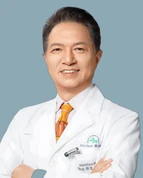
Professor Wu Haishan, MD
President, Shanghai Jiahui International Hospital
Professor Wu Haishan delivered the opening address at AIMS 2026. He has practised orthopaedics and sports medicine in China and abroad, and leads Jiahui's work in clinical research, medical education and international collaboration.
Care Grounded in Evidence
Jiahui combines international clinical standards with research and education through J-Med, supporting patients who want a second opinion or a coordinated treatment plan in Shanghai.
Request a ConsultationDisclaimer: This article is a report on AIMS 2026 based on content originally published by Jiahui Healthcare (嘉会医疗) on WeChat. Conference presentations describe research and developing technologies and are not clinical recommendations. It is intended for general information and does not constitute medical advice. For diagnosis and treatment, please consult a physician in person.